
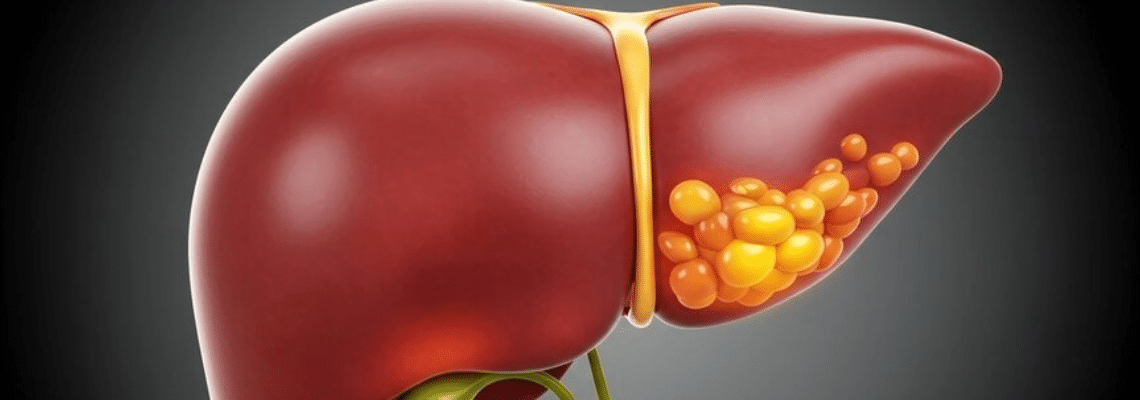
Children whose mothers consume a diet high in fat and sugar during pregnancy and breastfeeding are at greater risk of developing fatty liver disease later in life. New findings from the University of Oklahoma suggest that this risk can be reduced.
Investigating the Role of the Microbiome
In the study, pregnant and lactating mice that were given a naturally occurring compound from healthy gut bacteria had offspring that showed a significantly lower rate of fatty liver disease throughout their lives. The compound studied is called indole. It is produced by beneficial gut bacteria when they break down tryptophan, an amino acid found in foods such as turkey and nuts.

Indole is an organic compound that chemically belongs to the aromatic heterocycles. It consists of a benzene ring connected to a pyrrole ring. Biologically, indole plays a role primarily as a metabolite of tryptophan, an essential amino acid. Certain healthy gut bacteria can break down tryptophan in the gut into indole. Indole itself has several important functions in the body. It can have an anti-inflammatory effect, strengthen the intestinal barrier, and influence metabolism via signaling pathways in the intestine and liver. Current research shows that indole can also influence the development of fatty liver disease in offspring if it is present in sufficient quantities during pregnancy and breastfeeding. The findings complement growing research on the prevention of metabolic-associated steatotic liver disease (MASLD). This form of fatty liver disease affects both adults and children, but often progresses more rapidly in children and is closely linked to diabetes mellitus.
“The prevalence of MASLD in children is about 30% in children with obesity and about 10% in children without obesity,” said Dr. Jed Friedman, director of the OU Health Harold Hamm Diabetes Center and professor of biochemistry and physiology at the OU College of Medicine. “Unfortunately, the risk is higher if the mother is obese or has an unhealthy diet. The disease is asymptomatic in children and is usually only discovered when parents seek help for their child’s liver-related symptoms.”
Friedman led the study together with Karen Jonscher, Ph.D., associate professor of biochemistry and physiology at the OU College of Medicine. Their work was published in the journal eBioMedicine. The team wanted to investigate whether gut bacteria, collectively referred to as the microbiome, influence the development of fatty liver disease. To investigate this, female mice were fed a high-fat, high-sugar (Western) diet during pregnancy and lactation. Some of the mice were also given indole. After weaning, the offspring were initially fed a standard diet and later switched to a Western diet to promote the development of fatty liver disease. “Since offspring inherit their mother’s microbiome, poor maternal nutrition can have a detrimental effect on the infant’s microbiome,” Friedman said.
Healthier Livers and Lasting Benefits
Offspring of mothers who received indole showed several health benefits. They had healthier livers, gained less weight, maintained lower blood sugar levels, and developed smaller fat cells, even after being exposed to an unhealthy diet later in life. The researchers also observed the activation of a protective intestinal pathway involving the acyl hydrocarbon receptor (AHR).
The study found no increase in harmful liver fats known as long-chain ceramides, while levels of beneficial very long-chain ceramides increased. In an important experiment, gut bacteria were transferred from the protected offspring to other mice that had not received indole. These mice also showed less liver damage, confirming the assumption that the microbiome itself has a central protective function.
Although the research was conducted in animals and cannot yet be directly applied to humans, the findings point to new strategies for reducing the increasing impact of MASLD through early prevention. Currently, weight loss is the only effective treatment option for pediatric MASLD once the disease has developed, and there are no approved medications. “Anything we can do to improve the mother’s microbiome may help prevent the development of MASLD in offspring,” Jonscher said. “That would be far better than trying to reverse the disease once it has already progressed.”
Strategies that Help Improve the Mother’s Microbiome to Reduce the Risk of Fatty Liver Disease in Offspring
Nutrition

- High-fiber diet: Whole grains, legumes, fruits, and vegetables promote the growth of healthy gut bacteria.
- Fermented foods: Yogurt, kefir, sauerkraut, or kimchi can provide probiotic bacteria.
- Reduced sugar and fat consumption: Saturated fats and highly processed sugar products in particular have a negative effect on the microbiome.
- Healthy fats: Omega-3 fatty acids (e.g., from fish, flaxseed, chia seeds) have an anti-inflammatory effect and promote healthy gut flora.
- Foods rich in tryptophan: Since gut bacteria convert tryptophan into indole, foods such as eggs, dairy products, nuts, seeds, and meat can provide the precursors.
Lifestyle
- Regular physical activity: Moderate exercise during pregnancy can have a positive effect on the microbiome.
- Stress reduction: Chronic stress can negatively alter the intestinal flora, so relaxation techniques such as meditation or yoga can help.
- Avoid unnecessary antibiotics: Antibiotics can severely disrupt the balance of intestinal bacteria.
Targeted Nutritional Supplements
- Probiotics: Certain strains (e.g., Lactobacillus, Bifidobacterium) can stabilize the intestinal flora.
- Prebiotics: Dietary fiber or special types of sugar that feed the good intestinal bacteria.
- Postbiotics: Compounds such as indole, which are produced directly by healthy bacteria, could be used in a targeted manner in the future (still in research).
Related Posts
-

-

Obesity, a condition that could reach 50% of the population in some industrialized countries by…
-

Researchers altered the composition of the gut microbiota in male mice by common antibiotics, leading…


