

New research findings from neuroscientists at Trinity College Dublin show that babies as young as two months old can classify what they see into different object categories. This ability appears to emerge much earlier than scientists had previously assumed, suggesting that important building blocks of perception are present almost from the beginning of life. By combining brain imaging with artificial intelligence models, the researchers gained new insights into how infants think and learn in their first months of life. The findings help to clarify what happens in a baby’s brain long before they can speak or perform conscious movements. The study was recently published in the journal Nature Neuroscience by a research team from the Trinity College Institute of Neuroscience (TCIN) and the School of Psychology.
What Scientists are Lerarning About the Minds of Babies
“Parents and scientists have long wondered what goes on in babies’ minds and what they actually see when they look at the world around them. This research highlights the diversity of brain function in the first year of life,” explains Dr. Cliona O’Doherty, the study’s lead author, who conducted the work at Trinity’s Cusack Lab.

“Although communication is limited in two-month-old infants due to a lack of language and fine motor skills, their thoughts already represented not only how things look, but they also figured out what category they belonged to. This shows that the foundations of visual perception are in place very early on and much earlier than expected.”
In collaboration with Coombe and Rotunda Hospitals in Dublin, the FOUNDCOG team recruited 130 infants, all aged two months. Each baby lay comfortably on a soft beanbag, wore noise-canceling headphones, and viewed bright, colorful images designed to capture their attention for 15 to 20 minutes. This setup allowed researchers to use functional magnetic resonance imaging (fMRI) to record patterns of brain activity while the babies viewed images from 12 familiar visual categories, such as cat, bird, rubber duck, shopping cart, and tree.
How Artificial Intelligence Helped Decipher Brain Activity
After capturing the brain scans, the team used artificial intelligence models to analyze how different visual categories were represented in the infants’ brains. By comparing the activity patterns along the visual recognition pathways in the models and in the babies’ brains, the researchers were able to better understand how early categorization takes place.
“This study is the largest longitudinal study using functional magnetic resonance imaging (fMRI) in awake infants. The extensive dataset capturing brain activity opens up a whole new way to measure the thoughts of babies at a very early age. It also highlights the potential of neuroimaging and computer models as diagnostic tools in very young infants,“ says team leader Rhodri Cusack, Thomas Mitchell Professor of Cognitive Neuroscience at Trinity School of Psychology and Trinity College Institute of Neuroscience. ”Babies learn much faster than today’s AI models. By studying how they do this, we hope to inspire a new generation of AI models that learn more efficiently, thereby reducing their economic and environmental costs.”
Why These Findings are Important Beyond the Lab
Dr. Anna Truzzi, currently at Queen’s University Belfast and co-author of the study, emphasized how recent advances have made this research possible. “Until recently, we couldn’t reliably measure how specific areas of the infant brain interpret visual information. By combining AI and neuroimaging, our study offers unique insights that help us understand much more about how babies learn in their first year of life.” The first year of life is a period of rapid and complex brain development.
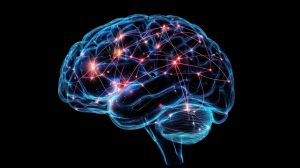
Although the brain’s basic structures are already in place at birth, many functional systems are still immature and only develop further in close interaction with the environment. During this time, intensive formation of new neural connections takes place, a process known as synaptogenesis. This creates numerous synapses between nerve cells, which form the basis for information processing, perception, movement, and learning. The number of these connections is particularly high in the first months of life, as the brain responds to a wide range of stimuli and establishes various possible neural networks.
At the same time, progressive myelination takes place. This involves nerve fibers being surrounded by a layer of myelin, which acts as electrical insulation and significantly increases the speed of signal transmission between nerve cells. This development gradually improves sensory and motor skills, such as visual perception, hand-eye coordination, and control over body movements. Basic reflexes are also increasingly replaced by voluntary movements.
In addition to the formation of new connections, the selective stabilization and degradation of synapses also plays an important role. This process is known as synaptic pruning. Frequently used neural connections are strengthened, while rarely used connections are broken down again. In this way, the brain adapts to the child’s individual experiences and environmental conditions. Sensory impressions, social interactions, language, and movement thus contribute significantly to the organization of neural networks.
Neurological Developmental Disorders and Early Brain Development
In addition, important functional areas of the brain continue to develop during the first year of life, including regions responsible for perception, memory, emotions, and early forms of communication. These developments are closely linked to the maturation of basic cognitive processes such as attention, early forms of learning, and the ability to recognize familiar people and voices. Overall, this early stage of life is therefore characterized by particularly high neural plasticity, making the brain highly adaptable and sensitive to external influences.
This study provides new fundamental insights that will guide early childhood education, improve clinical support for neurological developmental disorders, and inspire more biologically informed approaches to artificial intelligence.” Professor Eleanor Molloy, neonatologist at Children’s Health Ireland and co-author, highlighted the broader significance of the work. “There is an urgent need for a better understanding of how neurological developmental disorders alter early brain development, and awake fMRI has considerable potential to investigate this.”
Related Posts
-

We give meaning to our world by categorizing objects. When and how does this process…
-

Vitamin K is an essential vitamin and plays an important role in maintaining good health…
-

When do humans acquire consciousness in the course of their development? When French philosopher René…


