

A new study led by researchers at the UCLA Health Jonsson Comprehensive Cancer Center provides important evidence that breast cancer developing shortly after pregnancy may have distinct biological characteristics. The study shows that breast cancers diagnosed within the first three years after childbirth—particularly in the first year—are more likely to exhibit features associated with a more aggressive tumor biology.
The results, published in the journal npj Breast Cancer, support the growing evidence that so-called postpartum breast cancer—that is, breast cancer occurring after childbirth—is not simply a coincidental occurrence during a specific stage of life. Rather, it may represent a distinct phase in which biological changes in breast tissue influence the characteristics of certain tumors. The study authors emphasize, however, that a more aggressive tumor biology does not automatically mean that affected women have poorer treatment outcomes. Modern therapies appear to be able to partially offset the increased risk. The findings could, however, help identify patients at particularly high risk earlier and tailor their treatment more precisely.
Pregnancy Changes the Breast and Its Biological Environment
Pregnancy leads to profound changes in breast tissue. During this time, glandular tissue grows, milk-producing structures develop, and numerous hormonal signals control the remodeling of the breast. After childbirth, a new adaptation process begins in which the tissue regresses.

This so-called regression phase is a biologically very active process. During this time, cells that are no longer needed are broken down, tissue structures are altered, and inflammatory processes are activated. These natural repair and remodeling processes are normally part of the return to the initial state. However, scientists suspect that this specific environment may also influence the growth of certain tumor cells if cancer develops during this time.
Previous studies had already shown that breast cancer diagnosed within a few years of pregnancy is more likely to exhibit aggressive characteristics and is sometimes associated with a less favorable prognosis. Until now, however, it was unclear exactly how long this specific risk period after childbirth actually lasts.
Researchers examined the timing of diagnosis after childbirth
To investigate this question more closely, the research team analyzed 385 women aged 45 or younger who had been treated at UCLA between 2011 and 2024 for early-stage hormone receptor-positive, HER2-negative breast cancer.
The scientists then categorized the patients based on the amount of time that had elapsed between their last birth and their breast cancer diagnosis. They compared women who had never given birth with women whose diagnosis had been made within various time frames following a pregnancy.
The researchers sought to determine whether the biological characteristics of the tumors differed depending on the time elapsed since childbirth.
Genomic Test Shows Increased Biological Risk
For the study, the scientists used the Oncotype DX Recurrence Test. This widely used genomic test evaluates the activity of 21 different genes within a tumor. From this, a so-called recurrence score is calculated, which provides indications of how likely the disease is to recur and whether chemotherapy is likely to provide additional benefit.
The analysis revealed significant differences between the groups. Women whose breast cancer was diagnosed within the first year after childbirth had, on average, higher recurrence scores than women who had never given birth. Elevated scores were also observed in the second and third years after childbirth, though to a lesser extent.
When considering all patients diagnosed within three years after childbirth as a group, the likelihood of having a tumor with a higher recurrence score was nearly three times higher than in women who had never given birth. In addition, the researchers found that these tumors were more likely to have a higher tumor grade. A higher grade means that the cancer cells differ more significantly from normal cells and appear more aggressive under the microscope. Such changes may be associated with faster growth or a higher likelihood of recurrence.
Why Genetic Testing Can Provide Additional Insights
A particularly important finding of the study was that differences in tumor biology were not always detectable through standard medical examinations. In routine cancer diagnosis, factors such as tumor size, lymph node involvement, hormone receptor status, or certain microscopic characteristics of the cancer cells are initially evaluated. These characteristics are crucial for assessing the disease and selecting treatment, but they do not always reflect a tumor’s full biological behavior.
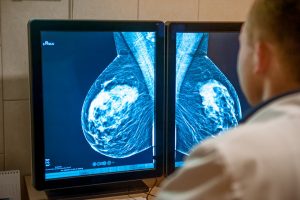
The UCLA team’s study showed that some breast tumors following a recent pregnancy may exhibit genetic characteristics associated with a higher risk of recurrence, even though conventional clinical findings did not necessarily indicate a more aggressive disease. It was only through the analysis of gene activity that these additional differences could be revealed. The Oncotype DX test used in this study does not merely examine individual characteristics of the tumor but considers an entire pattern of genes involved in various biological processes. These include, among other things, signals that influence cell growth, the division of cancer cells, and the likelihood of tumor regrowth. As a result, the test can provide insights into how active and aggressive a tumor actually is at the molecular level.
These findings illustrate that cancer cannot be assessed solely based on its visible appearance. Two tumors may look similar under a microscope yet possess different genetic characteristics that influence their future behavior. So-called precision medicine uses precisely these molecular differences to better tailor therapies to a patient’s individual situation. The researchers therefore suspect that, in the future, younger breast cancer patients’ reproductive history could also be factored more heavily into the assessment. This includes, for example, information on whether a woman has recently given birth and how long ago the birth occurred. This information could provide additional clues as to how a genetic test result should be interpreted and whether more intensive monitoring or an adjusted treatment plan might be appropriate.
This does not mean that every woman automatically has a higher risk of breast cancer after pregnancy. Rather, the results show that the timing of a breast cancer diagnosis following childbirth may represent important biological information. If these associations are confirmed in further studies, doctors may in the future be better able to identify which patients should be monitored particularly closely and which treatment options promise the greatest benefit.
More Aggressive Characteristics Do Not Automatically Mean a Worse Prognosis
Despite the more aggressive biological characteristics, the researchers found no significant difference in short-term treatment outcomes. After a follow-up period of about four years, the recurrence rates and survival data for women diagnosed with breast cancer within three years of giving birth were comparable to those of other patients. One possible explanation for this is that women with biologically higher-risk tumors were more likely to receive more intensive treatments. These included, among other things, chemotherapy, medications to suppress ovarian function, and modern targeted therapies. The results thus highlight an important distinction: While a tumor may have biologically more aggressive characteristics, early diagnosis and appropriate treatment may potentially reduce this additional risk.
Implications for Future Breast Cancer Care
The study’s findings could have significant long-term implications for how breast cancer is assessed and treated in younger women following pregnancy. However, the researchers emphasize that the findings to date must first be confirmed by further studies before they can lead to changes in medical practice. This will require larger studies involving patients from various hospitals, different population groups, and longer follow-up periods.
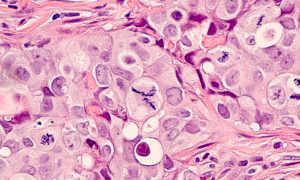
If the results are confirmed, the time elapsed since the last birth could be given greater weight in the assessment of breast cancer in the future. To date, medical evaluation has focused primarily on characteristics of the tumor itself, such as its size, genetic features, hormone status, or lymph node involvement. The new research, however, suggests that the body’s biological state at the time of diagnosis could also play an important role. In particular, the first one to three years after childbirth could represent a critical window of opportunity. During this phase, breast tissue is still undergoing extensive changes as the hormonal environment and tissue structure readjust following pregnancy. The researchers suspect that these specific conditions could influence the development or behavior of certain tumors in some women.
A better understanding of these relationships could help identify high-risk patients earlier and tailor follow-up care more effectively. For example, it is conceivable that women diagnosed with breast cancer shortly after giving birth could be monitored more closely, or that additional information from genomic tests could be incorporated more heavily into treatment decisions. Furthermore, the research could help shed light on why some breast tumors develop more aggressive characteristics after pregnancy, while others exhibit less pronounced behavior. Identifying the underlying biological mechanisms could provide new avenues for future therapies.
The long-term goal is to personalize breast cancer treatment even further. Instead of treating all patients with similar tumors according to the same protocol, additional factors such as age, genetic tumor characteristics, and the time elapsed since pregnancy could be combined in the future to develop the best individualized strategy for each patient.
Related Posts
-

When a woman is pregnant, the last thought on her mind is being afflicted with…
-

After deciding to breastfeed your baby, one investment many mothers consider is whether or not…
-

Do you have a baby and are struggling to produce enough breast milk? It is…


