

New research shows that certain protein patterns in the blood—even during pregnancy—are linked to pregnancy complications that become apparent later on and to potential long-term health risks. What does this mean for expectant mothers?
What Does Our Blood Reveal About Pregnancy?
During pregnancy, the body performs extraordinary feats. Blood flow changes, metabolism adapts, and the placenta takes on important roles in nourishing the unborn child. All of these processes leave traces in the blood. Proteins are of particular interest here. They are vital substances involved in, among other things, the transport of substances, immune defense, inflammatory responses, and the regulation of blood vessels.
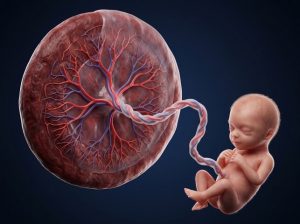
The totality of proteins in a blood sample is referred to as the proteome. Modern laboratory methods can now analyze thousands of proteins simultaneously. This gives researchers a more comprehensive insight into the processes occurring in the body than conventional individual tests can provide. An important research question is therefore: Can certain combinations of blood proteins indicate early on that a pregnancy is developing differently than expected?
A Recent Study Provides New Insights
A study published in September 2026 in the journal eBioMedicine investigated whether protein patterns in the blood could provide clues about long-term health risks. The researchers analyzed blood plasma samples from two independent study groups in Australia and the United Kingdom. The samples had been collected at 36 weeks of gestation.
In the Australian group, the researchers examined, among other cases, 118 pregnancies in which the baby later exhibited severe fetal growth restriction, as well as 92 pregnancies in which preeclampsia was later diagnosed. Pregnancies without these complications served as a control group. A second group from the United Kingdom allowed the researchers to validate the findings on fetal growth restriction in an additional population. Using a specialized laboratory technique, the researchers analyzed approximately 7,000 molecular protein markers in blood plasma.
The results were remarkable: In pregnancies where certain complications later occurred, protein patterns were found more frequently that had previously been linked to various long-term health risks in studies of non-pregnant individuals. These included patterns associated with cardiovascular disease, changes in kidney or liver function, and other health characteristics. It is important to note, however, that the study identified associations between the protein patterns and pregnancy complications. It did not prove that the women studied would actually go on to develop the corresponding conditions.
Why are Preeclampsia and Fetal Growth Restriction So Important?
Two pregnancy complications were the particular focus of the study. Preeclampsia: When pregnancy places a heavy strain on the body Preeclampsia is a potentially serious pregnancy complication that typically occurs after the 20th week of pregnancy. It is associated with newly developed high blood pressure and can affect other organs, such as the kidneys, liver, and brain. The condition is also significant because women who have had preeclampsia face an increased long-term risk of cardiovascular disease. The current findings could help us better understand the biological changes that occur even during pregnancy.
Fetal growth restriction occurs when an unborn child does not reach its growth potential. Insufficient placental function can play an important role in this. The study identified protein patterns in affected pregnancies that have been linked, among other things, to later cardiovascular risks and certain metabolic characteristics. This does not mean that a baby with growth restriction will inevitably develop health problems later in life. Rather, the findings may indicate that certain biological processes are relevant both to the course of pregnancy and to long-term health risks.
Can Blood Tests Predict Health Risks in the Future?
This is precisely where the potential of this research lies. Perhaps in the future, it will be possible to use specific protein patterns to identify early on which women, following a complicated pregnancy, might require more intensive post-pregnancy health follow-up. Possible measures could include, for example, more targeted monitoring of blood pressure, a more precise assessment of cardiovascular risk, or individually tailored postnatal care. However, further research is needed before this becomes a reality. The protein patterns examined must be validated in larger studies. In addition, researchers need to monitor how the women’s health evolves over many years.
The study itself did not examine the long-term health trajectories of the participants. Rather, it compared protein patterns during pregnancy with known associations between these patterns and health outcomes from other populations. A scientific finding is therefore not yet a reliable individual predictive test.
What Does this Mean for Expectant Mothers?
There is currently no reason for pregnant women to undergo additional blood tests based on this research. The procedures examined are not part of general routine prenatal care. It remains advisable to undergo the recommended prenatal checkups and to discuss known risk factors with your healthcare provider.
After experiencing preeclampsia, it is particularly important to continue monitoring your own health after childbirth and to have your blood pressure and other risk factors checked as recommended by your healthcare provider.
Above all, the new research underscores that pregnancy can provide important information not only for the child’s health but also for the mother’s long-term health.
A Look Into the Future of Prenatal Medicine
The analysis of blood proteins opens up new possibilities for better understanding biological changes during pregnancy. Current research findings show that certain protein patterns may be associated with pregnancy complications such as preeclampsia or impaired fetal development. At the same time, some of these patterns are linked to biological processes that could also play a role in long-term health.
Particularly exciting is the finding that certain changes may already be detectable in the blood during pregnancy. This could help medicine in the future to more closely examine the complex relationships between placental function, the mother’s metabolism, and the child’s development. The better these processes are understood, the more precisely risk factors could potentially be identified and preventive measures tailored.
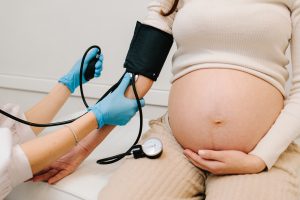
One conceivable goal of future research is to use characteristic protein patterns to better identify women who, following a pregnancy with complications, could benefit from particularly careful postnatal care. This is particularly important following preeclampsia, as affected women face an increased long-term risk of cardiovascular disease. Early monitoring of blood pressure, metabolism, and other risk factors could help detect health problems in a timely manner.
However, it is important to interpret the findings to date realistically. The protein patterns examined do not yet constitute reliable individual predictors of future diseases. Nor can a single blood sample reliably indicate whether a woman will develop a cardiovascular disease, kidney disease, or another chronic condition in a few years. This requires long-term observational studies with large groups of participants. These studies must demonstrate which associations actually exist, how meaningful the biomarkers under investigation are, and whether they offer additional value compared to already known risk factors. Furthermore, it must be determined whether the results can be confirmed across different population groups. Age, pre-existing conditions, genetic factors, lifestyle, and the course of the respective pregnancy can all influence health outcomes. A future test would have to take these factors into account before it could be meaningfully integrated into medical practice.
Better Understanding Pregnancy Complications
For expectant mothers, this research therefore means one thing above all else for now: Science is gaining increasing insight into the biological processes that accompany pregnancy. The results are no cause for concern and do not replace either regular prenatal checkups or a doctor’s assessment of individual risks. Rather, they demonstrate the possibilities that modern laboratory analyses could open up for future pregnancy medicine.
In the long term, the combination of protein analyses, clinical data, and other diagnostic procedures could help us better understand pregnancy complications and tailor postnatal care to individual needs. Until then, it remains crucial to carefully evaluate new findings and distinguish between promising research results and already established medical procedures. The key insight: In the future, pregnancy could not only provide medicine with important information about the current health of mother and child, but also potentially help to better assess health risks and improve long-term preventive care. Further research will reveal the full extent of these possibilities.
Related Posts
-

High blood pressure is the most common medical condition during pregnancy, complicating two to three…
-

As a pregnant mother, you likely know the importance of monitoring your overall nutrition, as…
-

You already have one or two children, and you're also expecting another. How can you…


