
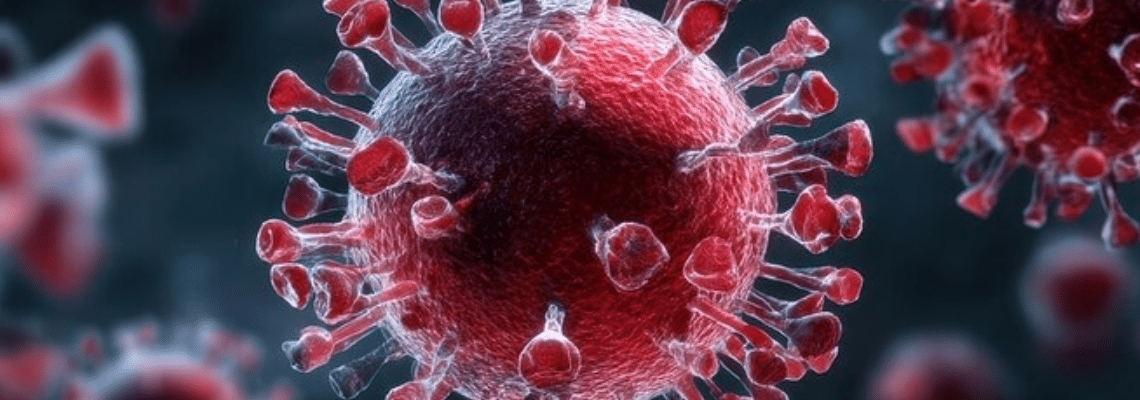
A recent study by the University of California, Riverside provides new insights into how the SARS-CoV-2 virus might interact with the very early stages of human development. The focus is on whether and how sensitively embryonic cells respond to a potential infection in the first weeks after fertilization. This phase is particularly critical, as it is during this time that the fundamental structures of the human body form.
Investigating Early Developmental Stages in the Lab
Since direct studies on human embryos are virtually impossible for ethical and practical reasons, researchers rely on specialized laboratory models. This study used a so-called “disease-in-a-dish” model, in which human stem cells are cultured under controlled conditions to mimic early developmental stages. This model allows researchers to observe processes that normally occur hidden within the body—particularly during the first weeks after fertilization, which are crucial for development but difficult to study scientifically.
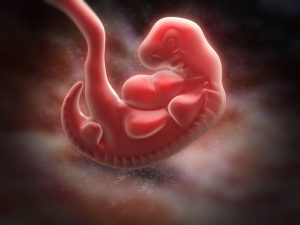
Scientists Ann Song and Prue Talbot exposed these artificially developed cell models to virus-like particles that mimic the behavior of SARS-CoV-2. This allowed them to specifically investigate how different cell types react to a potential infection without exposing themselves to a real risk of infection. The advantage of this approach is that individual factors can be examined in isolation, such as the role of specific cell surface structures or proteins in viral entry.
The results showed that several early embryonic cell types are fundamentally susceptible to such exposure. However, this susceptibility varied significantly. Ectodermal cells reacted particularly sensitively, while other cell layers such as the mesoderm or endoderm were less severely affected. These differences are scientifically significant, as they indicate that not all parts of a developing embryo react with equal sensitivity to external influences.
Additionally, such models allow us to infer how a potential infection might affect early developmental processes. Although the model does not fully replicate all conditions of a real pregnancy, it provides valuable insights into which cell types are particularly vulnerable and in which developmental phases potential risks might exist. Thus, this type of research forms an important foundation for planning future clinical studies in a more targeted manner and for better understanding the effects on the embryo in the womb.
Why Certain Cells are Particularly Vulnerable
The high vulnerability of ectoderm cells can be explained by several interlocking biological mechanisms. A central role is played by the enzyme TMPRSS2, which is present on the surface of many cells and helps the virus “activate” its envelope so that it can enter the cell at all. If this protein is present in increased amounts—as in the ectodermal cells studied—the likelihood that a virus will successfully enter the cell increases. Additionally, the ACE2 receptor is also crucial, as it serves as a docking site for the virus. Only when both factors are present and active can an infection occur efficiently.
Another important aspect is the structure of the cell surface. The so-called glycocalyx, a protective layer of sugar structures, is comparatively thin in ectodermal cells. This layer normally acts as a kind of barrier that prevents pathogens from easily reaching the cell membrane. If it is less developed, viruses have easier access to the receptors on the cell surface. Furthermore, early embryonic cells are in a highly active state of division and differentiation. During this phase, many cellular processes are “open” and dynamic, which fundamentally makes them more susceptible to disruption—including viral influences.
Taken together, this creates a particularly vulnerable situation: High receptor availability, proteins that facilitate entry, and a reduced protective barrier mean that certain cell types—particularly those of the ectoderm—could be infected more easily than others. However, this susceptibility is context-dependent and does not automatically mean that an infection actually occurs in the human body; rather, it initially describes a biological possibility under experimental conditions.
Significance for the Embryo in the Womb
The significance of these findings lies primarily in the very early phase of pregnancy, roughly the first four weeks after fertilization. During this time, the so-called germ layers develop, from which all organs later emerge. The ectoderm forms the basis for particularly complex structures such as the brain, the central nervous system, and parts of the sensory organs. Disruptions during this phase can therefore have potentially far-reaching consequences, as they affect very fundamental developmental steps.
If, theoretically, an interaction were to occur between the virus and embryonic cells, processes such as cell division, differentiation, and tissue organization could be particularly affected. This could manifest, for example, in altered development of nerve cells or result in certain structures not forming optimally. More subtle effects, such as delayed maturation of the nervous system or functional changes, are also conceivable, which may not become apparent until later in life.
At the same time, it is important to consider the protective mechanisms in the human body. The embryo in the womb is not directly exposed to the outside world but is protected by the uterus and later by the placenta. These structures act as a barrier and regulate which substances actually reach the embryo. In addition, the mother’s immune system plays an important role in defending against infections. Therefore, the susceptibility observed in the laboratory does not automatically mean that embryos in a real pregnancy will actually become infected.
Rather, the study highlights a potential biological risk and helps to understand which cell types are theoretically susceptible. This highlights the need for further research, particularly clinical trials, to clarify whether and under what circumstances such effects actually occur in the human body and what long-term consequences they might have.
Conclusion
The study provides important insights into early human development and shows that certain embryonic cell types could be fundamentally susceptible to the SARS-CoV-2 virus. Particularly striking is the susceptibility of ectodermal cells, from which the brain and central nervous system later develop. Since these structures are crucial for all subsequent cognitive and neurological functions, this raises questions about potential effects on embryonic development, especially if disruptions occur in very early stages.
At the same time, the results highlight just how sensitive the first weeks of pregnancy are. During this phase, fundamental processes such as cell division, differentiation, and organ formation take place. Disruptions during this period can—at least theoretically—have long-term consequences, as they affect the foundation of further development. The study thus makes it clear that external influences during this early phase must be examined with particular care, even if concrete effects in humans have not yet been conclusively demonstrated.
However, it is important to clearly acknowledge the limitations of the study. The results come from a laboratory model and not from observations of actual pregnancies. In the human body, additional protective mechanisms exist, such as the uterine environment, the placenta, and the mother’s immune system, which can hinder the direct transmission of viruses to the embryo. Therefore, it cannot be concluded from the study that embryos in the womb are actually infected or that damage automatically occurs.
Despite these limitations, the research is of great significance for medicine, particularly for pregnancy and developmental research. It identifies which cell types are potentially sensitive and provides a foundation for future clinical studies. The long-term goal of such studies will be to determine whether infections in early pregnancy can have subtle effects on fetal development—for example, in the neurological realm—and how such risks can be minimized if necessary.
Related Posts
-
More than half of our genome consists of thousands of remnants of ancient viral DNA…
-

The keto diet is all the rage these days, but many women wonder if it…
-

It is common knowledge that smoking isharmful. In particular, it poses a significant risk to…


