
Can certain antibodies in the blood provide clues as to whether a pregnancy will end prematurely? A new study in Nature Immunology offers surprising insights: Researchers identified characteristic immune patterns in women who experienced preterm birth. A specific autoantibody may influence processes that are crucial for the well-being of the unborn child. The discovery raises new questions about the causes of preterm birth and could, in the long term, also be relevant for the early detection of pregnancy complications.
When the Immune System Becomes Unbalanced During Pregnancy
A preterm birth poses major challenges for expectant parents and the medical community. If a baby is born before the 37th week of pregnancy, specific medical problems may arise depending on the timing of the birth. Very preterm infants often require intensive care because organs such as the lungs, brain, and digestive system are not yet fully developed. Although numerous risk factors are known, it is not always possible to explain why a pregnancy ends prematurely. In addition to infections, changes in the placenta, and certain maternal conditions, complex immunological processes are also thought to play a role. Now, an area that has received little attention to date is taking center stage: the response of the maternal immune system during pregnancy.

An international research team analyzed blood samples from eight pregnancy cohorts and discovered characteristic patterns of autoantibodies associated with preterm births. Particularly notable was an antibody that targets a protein produced by the body that normally has an anti-inflammatory effect. The findings could help shed light on the biological causes of certain preterm births. However, it remains to be seen whether this will lead to the development of a reliable early-detection test or a new treatment in the future. During pregnancy, the mother’s immune system must adapt to a unique situation. The unborn child also carries genetic traits from the father and is therefore not completely immunologically identical to the mother’s organism. Nevertheless, the body must tolerate the child while simultaneously maintaining its ability to defend against pathogens. This adaptation is a complex biological process involving numerous immune cells, antibodies, and signaling molecules.
Antibodies play an important role in this process. They recognize specific structures and can trigger various immune system responses. Normally, they target pathogens or other foreign structures. In the case of so-called autoantibodies, however, the immune response is directed against the body’s own components. Such antibodies are not inherently pathological. Some are also found in healthy people without causing any symptoms. What matters is which structures they target, in what quantities they are present, and whether they impair those structures’ function.
In certain autoimmune diseases, autoantibodies can disrupt the body’s own processes and promote inflammation. Other antibodies, by contrast, are merely measurable byproducts of altered immune activity. Therefore, for every newly discovered antibody, it must be carefully investigated whether it itself contributes to a disease or merely indicates other processes. The research team sought to determine how antibody responses change during a normal pregnancy and whether a different pattern can be identified in women who have had preterm births.
Another scientific study provides evidence that certain autoantibodies may indeed be associated with pregnancy complications. A systematic review published in 2023 analyzed eight studies involving a total of 2,935 patients and examined the association between antiphospholipid antibodies and adverse pregnancy outcomes. The results suggested that certain antibody profiles may be associated with an increased risk of preterm birth. However, these are different autoantibodies than those examined in the current study on IL1RA. The results therefore do not confirm the same mechanism, but they do show that the role of the maternal immune system in pregnancy complications is already the subject of intensive research.
Thousands of Blood Samples Provide Clues to Different Immune Patterns
For their study, the scientists analyzed blood samples from eight different pregnancy cohorts. In total, the analysis included 2,719 samples from pregnant women as well as control samples from 130 non-pregnant individuals. Among the pregnancies studied, the researchers compared, among other things, women whose children were born prematurely with women who carried their pregnancies to term by the regular due date. In doing so, they found differences in the antibody patterns recorded. Certain immune responses were detected more frequently in women with premature births. These differences were observed across several of the cohorts studied.
It was particularly interesting that some of these distinctive patterns could be detected even before birth. The researchers found evidence suggesting that the antibody reactions associated with preterm births may not be exclusively a consequence of the premature birth itself, but may actually precede it. This opens up a new perspective on the causes of preterm births: Certain antibodies may reflect changes taking place in the mother’s body weeks before labor actually begins.
However, a statistical association does not necessarily mean that the antibodies actually cause preterm birth. Some may simply indicate that the immune system is already in an altered state. Additional studies are needed to distinguish between these possibilities.
A Specific Autoantibody is Drawing Particular Attention
The researchers focused particularly on an autoantibody against the protein IL1RA. The abbreviation stands for interleukin-1 receptor antagonist. This protein plays an important regulatory role in the immune system. It inhibits certain inflammatory signals triggered, among other things, by the signaling molecule interleukin-1 beta. Inflammation is not inherently harmful during pregnancy. It plays a role in various normal processes, such as the adaptation of maternal tissue. What is crucial is that the immune response is appropriate for the respective stage of pregnancy and does not proceed uncontrollably.
IL1RA acts as a natural counter-regulatory mechanism: it competes with pro-inflammatory signals for their receptors, thereby helping to limit the immune response. If autoantibodies block this protein or impair its function, some of this protective effect could be lost. Pro-inflammatory signals might then have an easier time.
This is particularly significant in the vicinity of the placenta. There, immune responses, cell growth, and the development of blood vessels must be precisely coordinated. An imbalance could impair the normal function of the tissue. The researchers therefore investigated more closely whether antibodies against IL1RA can indeed have biological effects relevant to the course of a pregnancy.
Experiments on Pregnant Mice Reveal Potential Consequences
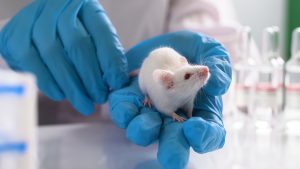
To determine whether the antibodies are merely associated with preterm births or can actually have biological effects, the scientists conducted additional experiments. In these experiments, they investigated the effect of antibodies against IL1RA in pregnant mice. The results suggested that these antibodies can exacerbate inflammatory processes and impair blood flow to the placenta. The researchers also observed pregnancy losses. The findings are particularly interesting because they go beyond a mere statistical observation. They provide evidence that a specific autoantibody can indeed interfere with biological processes that are important for the course of a pregnancy.
The placenta supplies the unborn child with oxygen and nutrients while also performing important functions in the exchange of substances between mother and child. Its blood vessels and the surrounding tissue must adapt to increasing demands during pregnancy. For this supply to function properly, placental tissue and maternal blood vessels must develop sufficiently. Inflammation and circulatory disorders can impair these processes. Depending on their extent and cause, such changes can be associated with various pregnancy complications.
If an autoantibody disrupts anti-inflammatory regulation, this could trigger a chain of biological reactions: An altered immune response affects the placental tissue, blood flow changes, and the conditions for supplying the unborn child may become less favorable. This is one possible explanation for the effects observed in animal experiments. However, it is not yet clear how often such a mechanism actually plays a role in human preterm births. Experiments on mice can provide important insights into biological relationships but do not fully replicate human pregnancy. The results therefore do not prove that the antibodies act in the same way in women or directly trigger preterm birth.
How Common are These Bbnormal Antibodies?
The researchers also investigated how frequently antibodies against IL1RA can be detected in human blood samples. The results varied depending on the measurement method used and the group studied. In one study group, the antibodies were detected in about 6 percent of women who gave birth prematurely, compared with less than 1.5 percent of women who gave birth at term. In another subgroup, these antibodies were found in 16 percent of the premature births examined.
These figures also illustrate why the results should not be overinterpreted. The prevalence depended on the specific testing method and the group studied. The antibodies were by no means present in all women who experienced preterm birth. Conversely, the results do not imply that a woman with such antibodies will inevitably experience preterm birth.
It is therefore crucial for further research to more precisely determine the diagnostic value of such measurements. A potential test would need to reliably distinguish between women with an actual increased risk and those whose pregnancies proceed normally despite detectable antibodies.
In addition, it would be necessary to determine whether the test provides additional information beyond already known risk factors. These include, for example, a previous preterm birth, certain maternal conditions, or indications of complications during the current pregnancy.
Could a Blood Test Warn of Preterm Births in the Future?
This study essentially opens up the possibility of using certain antibody patterns as biomarkers in the future. Biomarkers are measurable biological characteristics that can provide clues about a person’s health status or risk of disease. A test that detects abnormal immune responses early in pregnancy would be particularly interesting. If a reliably elevated risk could be determined from this, women at risk could potentially be monitored more closely. Such a development could be relevant for prenatal care, as not all preterm births can currently be detected in advance. Depending on the cause and individual risk, different tests and measures may be considered. An additional biomarker could one day help identify certain risk groups more accurately.
Until then, however, further studies are needed. Among other things, researchers must determine how reliably the antibody patterns function in different population groups, which factors influence their development, and how accurately the risk of preterm birth can be assessed using them.

It must also be investigated whether the antibodies actually play a causal role in certain cases of preterm birth or merely indicate some of the underlying immune changes. A diagnostic test would only be useful if it were sufficiently reliable and if concrete medical decisions could be derived from the results. At present, such a test based on this study is not yet an established method of prenatal care.
Could this Perhaps Even Lead to a New Treatment?
In addition to the possibility of early detection, another question arises: Could the processes described be specifically targeted to prevent certain preterm births? If it is confirmed that blocking autoantibodies against IL1RA actually trigger pathological inflammatory reactions in some pregnancies, restoring the anti-inflammatory balance could be a potential research approach. For example, it would be conceivable to investigate more closely how the effects of these antibodies could be neutralized or how the disrupted immune regulation could be corrected. However, before such approaches could be considered for pregnant women, their potential benefits and risks would have to be carefully evaluated.
The immune system performs numerous important functions during pregnancy. Therefore, a targeted modification of inflammatory processes must not inadvertently impair other protective mechanisms or endanger the child’s development. The current study provides initial mechanistic insights but does not yet constitute evidence of a safe or effective treatment for pregnant women. Extensive preclinical studies, followed by clinical trials, would be necessary before any potential application could be considered. Based on the results, there is currently no recommendation for expectant mothers to undergo specific blood tests or take medications to influence the immune response.
What Expectant Mothers Should Know Now
The new study expands our understanding of how complex immune responses are during pregnancy. It shows that certain antibody patterns may be associated with preterm birth and that, in experimental studies, individual antibodies influence biological processes that are important for pregnancy. This represents an interesting approach for medical practice. However, it does not yet provide the basis for a reliable test to predict preterm birth or for a treatment tailored to this condition.
Premature birth can have numerous causes. These include, among others, infections, changes in the placenta, certain maternal conditions, and obstetric complications. Not every case can be attributed to a single mechanism. The new findings therefore do not mean that women need to control their immune systems or avoid everyday stressors to prevent premature birth. They describe a possible biological mechanism that first needs to be investigated further.
Expectant mothers should continue to attend the recommended prenatal checkups and discuss individual risk factors with their doctor or midwife. If there are signs of possible pregnancy complications, a medical evaluation is important—regardless of whether such autoantibodies are known to be present or not.
A New Approach to Preterm Birth Research
The study shows that the maternal immune system may play a more active role in certain cases of preterm birth than previously assumed. In particular, the potential significance of autoantibodies against IL1RA raises new questions about the regulation of inflammation and the function of the placenta. The next steps will involve verifying the results in additional human pregnancy cohorts, investigating the biological effects of the antibodies in greater detail, and evaluating their suitability as biomarkers.
If the association is confirmed, it could eventually lead to an additional approach for better understanding certain risks of preterm birth. Perhaps this will make it possible in the future to identify women who could benefit from more intensive monitoring.
The key finding: This research provides new insight into how dysregulated immune responses might influence the course of a pregnancy. No specific preventive or treatment recommendations can be derived from this yet. However, the detection of abnormal autoantibodies could serve as an important starting point for further investigations into the causes of preterm birth.
Related Posts
-

As a pregnant mother, you likely know the importance of monitoring your overall nutrition, as…
-

Metabolic dysfunction-associated steatotic liver disease (MASLD) affects around 25% of the world's population. Pregnant women…
-

Research shows that women who smoke during pregnancy are 2.6 times more likely to have…


