

A medical breakthrough in Alsace is paving new paths in prenatal medicine. For the first time, a team of doctors has succeeded in curing a rare and life-threatening tumor in an unborn child using medication alone. The treatment was administered exclusively through the pregnant mother’s bloodstream. This success marks a milestone in prenatal treatment and demonstrates that the placenta can serve as a highly effective bridge for complex therapies. Until now, tumor diagnoses in utero presented medical professionals with nearly insurmountable challenges. Often, the only options were high-risk fetal surgeries or the hope of delivering the child early via cesarean section. This case from France now opens up entirely new, minimally invasive avenues for fetal therapy.
The Diagnosis: An Invisible Enemy on Ultrasound
It all began as a completely normal, uneventful pregnancy. The expectant mother attended all routine prenatal checkups, and the child’s development seemed to be proceeding as planned. But during one of the regular ultrasound exams, the situation for the expectant parents suddenly shifted from pure anticipation to sheer fear. The prenatal diagnosticians’ monitor revealed a dramatic and highly complex image that immediately set off alarm bells: The doctors discovered a rare but extremely aggressive and uncontrolled vascular tumor in the fetus.
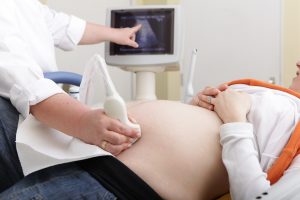
From a medical perspective, such fetal tumors are essentially a highly complex, malformed tangle of wildly proliferating, malformed blood vessels. These vessels have no normal function but behave like a parasitic organism within the unborn child. They deprive the already tiny and vulnerable body of massive amounts of energy, oxygen, and essential nutrients that would otherwise be directed toward the healthy growth of the organs. The larger this tangle of blood vessels becomes, the more resources it robs from the fetal organism.
Curiously, however, the primary and acutely life-threatening problem with this rare condition is not the tumor itself or tissue destruction per se. The far greater danger lies in the devastating impact on the unborn child’s cardiovascular system, which is still developing. Because this specific vascular tumor develops tremendous momentum of its own, it acts like a gigantic, insatiable sponge within the fetus’s circulatory system: it literally sucks up enormous amounts of the child’s blood and diverts it away from the rest of the body.
For the tiny fetal heart, this condition has catastrophic consequences. To compensate for the massive blood loss into the tumor while simultaneously keeping the child’s brain and kidneys alive, the heart muscle must work under unimaginable strain. It must pump twice, and in some cases three times, as fast and as hard as it would during a healthy pregnancy. However, a fetal heart muscle is not designed to withstand such extreme, sustained strain.
Due to this constant overwork, the heart is at risk of inexorably weakening and swelling. In medicine, this is referred to as incipient fetal heart failure. The unborn patient was thus at risk of acute, irreversible heart failure while still in the protective womb. From that moment on, a dramatic and nerve-wracking race against time began for the medical team and the parents, in which every day counted.
The Method: The Placenta as a Therapeutic Bridge
The medical team faced an extremely difficult decision. Direct, invasive surgery on the fetus in the womb (fetal surgery) carries enormous risks at such an early stage, including the loss of amniotic fluid, severe infections, or an immediate miscarriage. Simply delivering the baby was also not an option due to the extreme immaturity of the organs.
The specialists in Alsace therefore opted for a medical gamble: They wanted to fight the tumor without physically touching the child or the amniotic sac. The plan was to use the mother as a “pharmacy” for her unborn child. The principle behind the chosen treatment sounds simple, but in practice it requires the utmost precision. The doctors administered a customized, high-dose combination of medications to the pregnant mother. The major scientific and medical challenge was to select active ingredients that met two conditions:
- Crossing the placental barrier: The molecules had to be able to pass through the placenta’s natural filter to enter the baby’s circulation.
- Targeted effect without harm: The medications had to block the growth of the tumor’s blood vessels, but at the same time, they could not jeopardize the healthy development of the baby’s organs.
After the mother began therapy, she was under round-the-clock medical observation. Using high-resolution ultrasound technology and heart rate measurements, the doctors monitored every millimeter of the tumor and every heartbeat of the baby.
The Miracle Week by Week: The Tumor Shrinks
Remarkably soon after the mother began taking the medication, follow-up examinations revealed a success that even the boldest optimists and the treating medical team had hardly dared to hope for in this form. The close-monitored, highly precise ultrasound and heart rate monitoring documented, step by step, a true medical miracle on the screens: The tumor, which had previously been growing so aggressively, completely halted its dangerous expansion from one day to the next. The destructive cell division inside the vascular malformation was successfully blocked by the active ingredient in the fetal bloodstream.
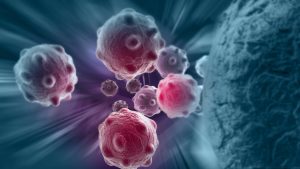
But that was only the beginning of an unprecedented medical success story. As if it weren’t enough that the tumor had stopped growing—in the days and weeks that followed, the entire abnormal vascular mass continued to contract. Week by week, the tumor’s mass shrank measurably and retreated as if in fast motion. The vessels, which had previously absorbed the child’s blood like an insatiable sponge, systematically atrophied and regressed. For the expectant parents and the medical team, every weekly examination was a moment of profound relief as the measurements on the ultrasound image showed increasingly smaller values.
This continuous and drastic reduction in tumor tissue produced exactly the effect everyone had hoped for: the fetus’s overburdened heart was suddenly and noticeably relieved. As the paratidal “blood sponge” continued to shrink in volume, the tiny heart no longer had to fight against the extreme pressure. Fetal blood flow stabilized within a very short time, and blood flow velocities in the vessels returned to normal.
The previously acute and life-threatening signs of impending, fatal heart failure—such as fluid accumulation in the fetus’s tissues or pathological enlargement of the heart muscle—disappeared from one examination to the next. The unborn child had escaped mortal danger. Thanks to this spectacular medical turnaround, the fetus was able to continue developing completely normally, healthily, and without any limitations during the remaining weeks of pregnancy in the protective womb of the mother.
Why This Case Could Permanently Change Medicine
Thanks to the success of the treatment, the pregnancy was carried to term nearly up to the calculated due date. The child was eventually born vaginally, without complications, and in a remarkably stable condition.
Examinations conducted immediately after birth confirmed the clinical outcome: thanks to the prenatal medication, the life-threatening vascular tumor had been suppressed to such an extent that it no longer posed a threat to the newborn’s life or health. The baby is doing well today.
This world-first success in Alsace is far more than just an individual medical success story. It marks a paradigm shift in the entire fields of obstetrics and prenatal medicine:
- Safety for mother and child: Avoiding invasive procedures in the womb dramatically reduces the risk of infections and preterm births.
- New avenues for pharmacology: The case provides valuable data on how certain medications cross the placental barrier and how the fetal organism processes them.
- Hope for other rare diseases: The successful treatment paves the way for treating other genetic defects, metabolic disorders, or types of tumors before birth using medication alone in the future.
Medical professionals have demonstrated that modern medicine is blurring the line between the mother as a patient and the fetus as a patient—for the benefit of the unborn child.
Related Posts
-
-
[ultimatemember_password]
-

Vitamins and minerals are an essential part of women’s health. When trying to conceive a…


