

A successful birth depends on the uterus producing steady, well-coordinated contractions that move the baby safely through birth. Hormones such as progesterone and oxytocin play an important role in controlling this process. However, for years, researchers have suspected that physical forces at work during pregnancy and birth, including stretching and pressure, also play an important role. New research findings from Scripps Research, published in Science, now show how the uterus senses and responds to these physical forces at the molecular level. The findings shed light on why labor sometimes slows down or starts too early, and could guide future efforts to improve the treatment of pregnancy and birth complications.
Two Sensors With Different Functions During Birth
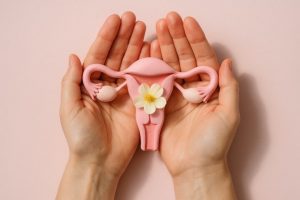
“As the baby grows, the uterus expands greatly, and these physical forces reach their peak during birth,” says lead author Ardem Patapoutian, a researcher at the Howard Hughes Medical Institute and holder of the Presidential Endowed Chair in Neurobiology at Scripps Research. “Our study shows that the body uses specialized pressure sensors to interpret these signals and translate them into coordinated muscle activity.” Patapoutian was awarded the 2021 Nobel Prize in Physiology or Medicine for identifying the cellular sensors that enable organisms to perceive touch and pressure. These sensors are ion channels made up of the proteins PIEZO1 and PIEZO2, which enable cells to respond to mechanical forces.
In the new study, the researchers found that PIEZO1 and PIEZO2 perform different but complementary tasks during labor. PIEZO1 acts mainly in the smooth muscle of the uterus, where it senses the increasing pressure as contractions intensify. PIEZO2, on the other hand, is located in the sensory nerves in the cervix and vagina. It is activated when the baby stretches these tissues and triggers a neural reflex that intensifies uterine contractions. Together, these sensors convert stretching and pressure into electrical and chemical signals that help synchronize contractions. If one signaling pathway is interrupted, the other can partially compensate, helping labor to continue.
Wiring the Uterus for Strong Contractions
To test how important these sensors are, the team used mouse models in which PIEZO1 and PIEZO2 were selectively removed from either the uterine muscle or the surrounding sensory nerves. Tiny pressure sensors measured the strength and timing of contractions during natural labor. Mice lacking both PIEZO proteins showed weaker uterine pressure and delayed births, suggesting that muscle-based perception and nerve-based perception normally work together. When both systems failed, labor activity was significantly impaired.
Further investigation revealed that PIEZO activity contributes to the regulation of connexin 43, a protein that forms gap junctions. These microscopic channels connect neighboring smooth muscle cells so that they contract together rather than independently. When PIEZO signaling was reduced, connexin 43 levels decreased and contractions became less coordinated. “Connexin 43 is the connection that allows all muscle cells to work together,” says first author Yunxiao Zhang, a postdoctoral fellow in Patapoutian’s lab. “When this connection weakens, the contractions lose strength.”
Potential Implications for Obstetrics
Samples of human uterine tissue showed similar patterns of PIEZO1 and PIEZO2 expression as in mice. This suggests that a comparable force measurement system is likely to function in humans. The findings could help explain birth problems characterized by weak or irregular contractions that prolong delivery. The findings also align with clinical observations that complete blockage of sensory nerves can prolong labor.
“In clinical practice, epidural anesthesia is administered in carefully controlled doses because complete blockage of sensory nerves can significantly prolong labor,” Zhang notes. “Our data reflect this phenomenon: when we removed the sensory PIEZO2 signaling pathway, contractions weakened, suggesting that some nerve feedback promotes labor.”
The study opens up possibilities for more targeted approaches to treating labor and pain. If researchers can develop safe methods for regulating PIEZO activity, it may become possible to either slow down or intensify labor as needed. For women at risk of premature birth, a PIEZO1 blocker, if developed, could be used in conjunction with current medications that relax the uterine muscles by limiting calcium entry into the cells. On the other hand, activating PIEZO channels could help restart labor in cases of stalled delivery. Although these applications are still a long way off, the underlying biology is becoming increasingly clear.
Mapping the Nerve Pathways of Labor

The research team is currently investigating how mechanical perception and hormonal control interact during pregnancy. Previous studies show that progesterone, the hormone that keeps the uterus relaxed, can suppress connexin-43 expression even when PIEZO channels are active. This helps prevent contractions from starting too early. When progesterone levels drop toward the end of pregnancy, PIEZO-controlled calcium signals can help initiate labor. “PIEZO channels and hormonal signals are two sides of the same system,” Zhang emphasizes. “Hormones set the stage, and force sensors help determine when and how strongly the uterus contracts.”
Future studies will focus on the sensory nerve networks involved in childbirth, as not all nerves around the uterus contain PIEZO2. Some may respond to other signals and act as backup systems. Distinguishing between nerves that promote contractions and those that transmit pain could ultimately lead to more precise methods of pain relief that do not slow down labor. For now, the findings underscore that the body’s ability to perceive physical force goes beyond touch and balance. It also plays a central role in one of biology’s most important processes. “Childbirth is a process where coordination and timing are everything,” Patapoutian says. “We are now beginning to understand how the uterus functions as both a muscle and a metronome to ensure that contractions follow the body’s own rhythm.”
Related Posts
-

It might feel like your pregnancy is taking forever, but you will get the chance…
-

Thousands of years of case studies, applied theories and rigorous analysis have brought modern medicine…
-