
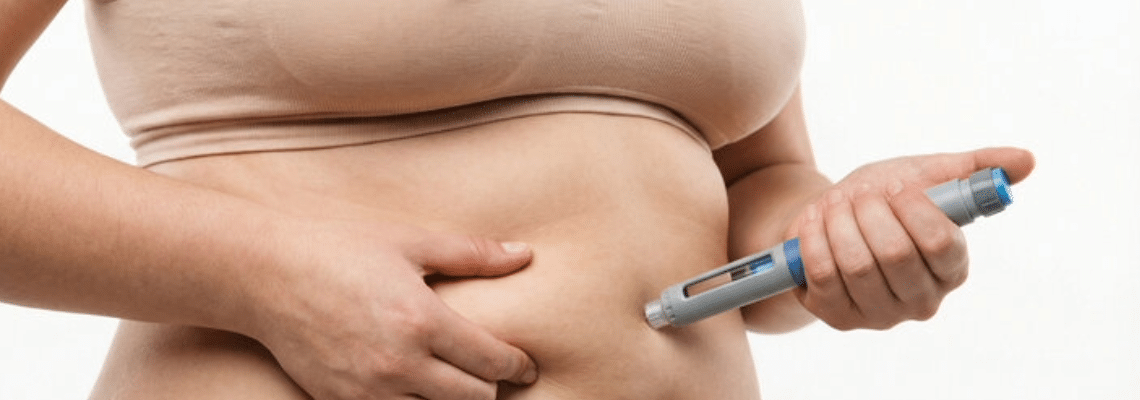
Weight-loss injections such as Wegovy, Ozempic, or Mounjaro are used to treat overweight, obesity, and, in some cases, type 2 diabetes. But what happens if a woman becomes pregnant during treatment? A new international expert recommendation provides initial answers—while also making it clear that many questions remain unanswered.
Weight-loss Injections Are Not Intended for Use During Pregnancy
GLP-1 medications and so-called incretin medications have become an integral part of the treatment for overweight and obesity in recent years. Among the best-known active ingredients are semaglutide and tirzepatide. Among other things, they influence feelings of hunger and food intake and can thus lead to significant weight loss. Mounjaro, which contains the active ingredient tirzepatide, is approved in the European Union for both the treatment of type 2 diabetes and for weight management. Wegovy contains semaglutide and is approved for weight management.

As these medications become more widely used, a question arises that could only be partially addressed in the original approval studies: What happens if a woman becomes pregnant during treatment? An international consensus paper published in 2026 addressed precisely this question. The authors reviewed the existing scientific literature on the use of incretin medications in women in the context of pregnancy and reproduction and developed recommendations for clinical practice based on this review.
The key message is clear: GLP-1 and other incretin-based medications should not be specifically used during pregnancy. This is primarily because the effects of these active ingredients on the development of the unborn child have not yet been sufficiently studied. No large randomized trials are available for pregnant women—and for ethical reasons, such studies are generally not conducted.
In addition, there is evidence from animal studies. In animal studies of various GLP-1 medications, effects on embryonic and fetal development, among other things, were observed. However, such results cannot be directly applied to humans. Nevertheless, they are a reason not to routinely use these medications during pregnancy. The European Medicines Agency therefore provides clear guidance on the use of these medications during pregnancy. For Mounjaro, for example, use during pregnancy is not recommended.
What Should You Do if the Pregnancy is Discovered Later?
This is likely the most important practical question for women who are already using a GLP-1 medication. A pregnancy may go unnoticed in the first few weeks. If a weight-loss injection was used during this time, based on current knowledge, this does not automatically mean that the unborn child has been harmed.
The data available so far are cautiously reassuring on this point. Observational data have not yet shown a statistically significant increase in severe congenital malformations following unintentional exposure to GLP-1 receptor agonists in early pregnancy. At the same time, the number of pregnancies studied is still limited, and reliable data are lacking for many possible pregnancy outcomes.
This is an important distinction: There is currently no evidence of an increased risk of birth defects—but equally, there is insufficient data to classify these medications as safe during pregnancy. Anyone who receives a positive pregnancy test while taking these medications should therefore discuss further treatment promptly with their treating physician.
No Reason to Panic—But Seek Medical Clarification
A positive pregnancy test after taking medication can understandably cause great concern. However, current data do not provide any reason to automatically assume that the child will be harmed following accidental early use. At the same time, it is essential to have the situation medically evaluated. The reason the medication was prescribed also plays a role in this assessment.
In the case of treatment for obesity, weight loss is the primary goal. For a woman with type 2 diabetes, however, the active ingredient may be part of an important metabolic treatment regimen. In this case, it is not simply a matter of discontinuing the medication, but rather of continuing to ensure proper blood sugar control during pregnancy. This is because poorly controlled diabetes can also pose risks to both mother and child during pregnancy. Therefore, a medication should not be discontinued on one’s own or replaced with another without discussing further treatment with the medical team.
Why the Data Are Still Limited
There is a simple reason why scientific knowledge regarding GLP-1 medications during pregnancy is still incomplete: these active ingredients have only recently been used on a large scale for weight loss.
While this has led to an increase in the number of pregnancies involving unintended drug exposure, such data primarily come from observational studies, registries, reporting systems, or case reports.

The 2026 international consensus paper evaluated various types of studies. The authors conclude that, while the data to date do not show any clear safety signals regarding congenital malformations, significant gaps in knowledge still exist. In particular, long-term effects on the child’s development cannot currently be reliably assessed. This means that research is ongoing, but a definitive statement on the safety of these medications during pregnancy is not yet possible.
Why Weight Loss During Pregnancy Is Different
In the discussion about weight-loss injections and pregnancy, a distinction must also be made between unintentional medication use and targeted treatment. These medications are not intended to induce weight loss during pregnancy. Pregnancy is not a phase in which medication-assisted weight loss is the standard treatment goal.
However, this does not mean that a pregnant woman’s body weight is irrelevant. Being overweight or obese can be associated with various pregnancy complications. Managing these risks during pregnancy, however, is not simply a matter of continuing a weight-loss injection.
Instead, pregnancy is managed on an individual basis. The appropriate measures depend, among other factors, on the woman’s initial weight, existing medical conditions, and the course of the pregnancy.
What About Wegovy, Ozempic, and Mounjaro?
The term “weight-loss injection” encompasses various medications. Therefore, they should not all be lumped together. Wegovy contains semaglutide and is approved in the EU for weight management. Ozempic also contains semaglutide but is approved for the treatment of type 2 diabetes. Mounjaro contains tirzepatide and is used in the EU for both type 2 diabetes and weight management.
The active ingredients differ pharmacologically and also in terms of their product information. Therefore, statements regarding pregnancy should always refer to the specific medication. This is particularly important for women who are taking these medications for diabetes: Treatment of an existing metabolic disorder may still be necessary during pregnancy, but may need to be adjusted to a treatment plan suitable for pregnancy.
What if Several Doses Have Already Been Taken?
In this case as well, the rule is: Do not automatically assume the worst. Accidental intake before the pregnancy was discovered is different from deliberately continuing treatment during pregnancy. The observational data available to date provide no indication that such early, unintentional exposure generally leads to birth defects. However, the data set is not yet large enough to rule out every possible risk.

It is therefore important to inform the treating physician about the active ingredient used, the dose, and the timing of administration. This information can help assess the situation on a case-by-case basis and, if necessary, plan further tests or more closely monitored care.
What the New Recommendation Actually Says
The new international consensus statement can therefore be summarized as follows:
GLP-1 and other incretin medications are not intended for use during pregnancy. However, based on current knowledge, unintentional use during early pregnancy does not automatically mean harm to the unborn child.
The available data so far is cautiously reassuring, but not yet sufficient to give the all-clear. Researchers therefore emphasize the need for further studies and systematic monitoring of pregnancies following exposure to these medications.
Key Points at a Glance
- GLP-1/incretin medications should not be intentionally used during pregnancy.
- Accidental use during early pregnancy does not automatically mean that the baby has been harmed.
- Human data to date show no statistically significant increase in severe congenital malformations, but the data are still limited.
- Anyone who becomes pregnant while undergoing treatment should discuss continued use with a doctor as soon as possible.
- When being treated for diabetes, a medication should not simply be discontinued without a replacement, because poor blood sugar control also poses risks to the pregnancy.
- The various medications—such as semaglutide and tirzepatide—differ from one another and should not be treated as interchangeable across the board.
- Sufficient data are still lacking for many potential long-term effects.
When Medical Advice Is Extremely Important
The new findings are neither a cause for panic nor a green light for the use of weight-loss injections during pregnancy. Rather, the current message is: Do not use them intentionally, but if taken unintentionally, do not immediately assume the worst.
For women who only discover they are pregnant after starting treatment, individualized medical advice is therefore crucial. Anyone who discovers they are pregnant while taking a weight-loss injection should contact their treating physician as soon as possible. This applies even if the medication was taken during the first weeks of pregnancy. It is important not to continue taking the medication on your own, but also not to discontinue necessary treatment without consulting a doctor. Especially for women taking GLP-1 or incretin medications for type 2 diabetes, a joint decision must be made on how to safely continue or adjust treatment during pregnancy.
Healthcare professionals can assess which medication was used, how long it was taken, and whether an alternative treatment is necessary due to an existing condition—such as diabetes. Factors relevant to the medical assessment include, among others, the exact active ingredient, the dosage, the time of the last dose, and the course of the pregnancy. According to currently available data, if the medication is taken unintentionally in early pregnancy, there is no reason to automatically assume harm to the unborn child. However, the available data is still limited.
As a general rule: A pregnancy while taking such medication should always be evaluated by a doctor. The individual situation can be better assessed if the treating specialists know which medication was taken, at what dosage, and for how long. In general, you should always consult your doctor before taking any medication to ensure your own health as well as that of your baby! Research on GLP-1 medications and pregnancy will continue. The more pregnancies that are systematically recorded, the better we will be able to assess the actual risks in the future.
Related Posts
-

Gaining weight when you're pregnant is normal, but what about losing it? The following article…
-

While it's natural for women to gain weight during pregnancy, when a mother gains excessive…
-

Pregnancy is a very transitional time for a woman. Not only are you preparing for…


