
The uterus is one of the most important organs in the female body. It provides protection for a growing baby throughout the entire pregnancy, supplies it with nutrients and oxygen, and creates optimal conditions for its development. At the same time, the uterus undergoes more significant changes during these nine months than nearly any other organ in the body. But how is it structured, what functions does it perform, and what conditions can affect fertility or pregnancy?
What is the Uterus?
The uterus is a muscular hollow organ located in the pelvis between the bladder and the rectum. In a non-pregnant woman, it is about seven to nine centimeters long, four to five centimeters wide, and weighs approximately 50 to 90 grams. During pregnancy, however, it grows to many times its original size and can weigh about one kilogram by the end of pregnancy.
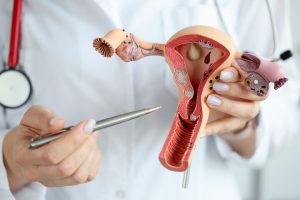
The uterus consists of three parts:
- Uterine fundus: the uppermost section of the uterus.
- Uterine body (corpus uteri): the largest part, where the baby develops.
- Cervix: connects the uterus to the vagina and remains tightly closed during pregnancy.
What is the Structure of the Uterus?
The uterine wall consists of three layers, each of which performs different functions.
Uterine lining (endometrium)
The inner layer is the uterine lining. It changes during each menstrual cycle under the influence of the hormones estrogen and progesterone. If pregnancy does not occur, the top layer of the lining is shed during menstruation. After bleeding, the lining rebuilds itself. If fertilization occurs, the embryo implants itself in this well-vascularized lining. It forms the basis for the later development of the placenta.
Muscular layer (myometrium)
The myometrium makes up the largest part of the uterine wall and consists of smooth muscle cells. These muscles can stretch and grow to an extraordinary degree. During pregnancy, both the size and the number of muscle cells increase. This allows the uterus to accommodate the growing baby, the amniotic fluid, and the placenta. During childbirth, these muscles contract rhythmically, producing the contractions that push the baby through the birth canal.
Outer Layer (Perimetrium)
The outer layer consists of a thin layer of connective tissue and peritoneum. It protects the uterus and allows it to glide smoothly against neighboring organs.
What Types of Cells are Found in the Uterus?
The uterus consists of various cell types that work closely together.
Muscle cells form the strong uterine wall and facilitate growth during pregnancy as well as contractions during childbirth.
Endometrial cells build up the uterine lining and create ideal conditions for the embryo to implant.
Glandular cells produce nutrient-rich secretions that nourish the embryo in the first few days after implantation.
Blood vessel cells form a dense network of arteries and veins that supplies the embryo—and later the placenta—with oxygen and nutrients.
Immune cells also play an important role. They help fend off pathogens while ensuring that the mother’s immune system accepts the embryo despite its partially paternal genetic material.
What are the Functions of the Uterus?
The uterus also performs important functions outside of pregnancy.
Its functions include:
- Preparing the uterine lining for a potential pregnancy
- Implantation of the fertilized egg
- Nourishing the embryo during the first days of development
- Formation of the placenta
- Protecting the unborn child
- Inducing labor during childbirth
- Recovery after childbirth
What Role Does the Uterus Play During Pregnancy?
During pregnancy, the uterus undergoes continuous changes.
Implantation
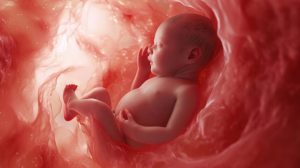
About six to seven days after fertilization, the embryo reaches the uterus and implants itself in the lining. There, the placenta begins to form, connecting the mother and child.
The baby’s growth
The uterus grows along with the baby throughout the entire pregnancy. Its muscles become thicker and, at the same time, more elastic. This creates sufficient space for:
- the baby
- the placenta
- the amniotic sac
- the amniotic fluid
- the umbilical cord
Nourishment of the baby
Through the placenta, the baby receives oxygen as well as all essential nutrients. At the same time, carbon dioxide and metabolic waste products are removed via the mother’s circulatory system. The uterus provides a particularly well-perfused environment for this purpose.
Protection of the Baby
Together with the amniotic sac and amniotic fluid, the uterus protects the unborn child from external influences. The amniotic fluid acts as a shock absorber while also allowing the baby to move freely, which is important for the development of muscles, joints, and the nervous system.
Preparing for Childbirth
Toward the end of pregnancy, so-called practice contractions occur. They prepare the uterine muscles for childbirth. During labor itself, strong contractions ensure that the cervix dilates and the baby can be born.
How Does the Uterus Change After Childbirth?
After delivery, the uterus begins to return to its pre-pregnancy state. Through afterpains, the uterus contracts and shrinks back to nearly its original size within about six to eight weeks. At the same time, the site where the placenta was attached to the uterus heals.
Uterine Conditions That Can Affect Pregnancy
Various conditions can affect fertility or the course of a pregnancy.
Fibroids
Fibroids are among the most common benign changes in the uterus. They are growths made up of muscle cells in the uterine wall. They can develop in various locations: within the muscle wall, on the outer surface of the uterus, or directly beneath the uterine lining. Many cause no symptoms. However, depending on their size and location, they can:
- make implantation more difficult,
- increase the risk of miscarriage,
- cause pain,
- increase the risk of preterm birth, or
- affect the baby’s position.
Whether a fibroid affects pregnancy depends primarily on its size and location. Small fibroids often cause no problems. However, if a fibroid is located near the uterine lining or alters the shape of the uterine cavity, it can make it difficult for an embryo to implant. Larger fibroids may also be associated with an increased risk of miscarriage, preterm labor, growth problems in the baby, or an unfavorable fetal position.
Endometriosis and Adenomyosis
In endometriosis, tissue similar to the uterine lining implants outside the uterus—for example, on the ovaries, in the pelvic cavity, or on the peritoneum. In adenomyosis, similar tissue grows into the muscular layer of the uterus.

Both conditions can impair fertility, as they promote inflammatory processes in the body and can alter the conditions necessary for implantation. Women with endometriosis or adenomyosis can become pregnant, but depending on the severity of their condition, they may sometimes require more intensive medical care. During pregnancy, these conditions may be associated with an increased risk of certain complications.
Uterine Malformations
Some women are born with an abnormally shaped uterus. These so-called Müllerian duct malformations develop during the early stages of the female embryo’s development. Depending on the type of malformation, the available space for the growing baby may be limited. Some forms have no consequences, while others may be associated with an increased risk of miscarriage, preterm birth, or an abnormal fetal position. A common variant, for example, is a bicornuate or heart-shaped uterus.
Cervical Insufficiency
The cervix seals off the uterus during pregnancy and protects the baby from external influences. In cases of cervical insufficiency, the cervix is shortened or opens prematurely, even though labor has not yet begun.
This can increase the risk of preterm birth. If such weakness is detected early, the pregnancy can be closely monitored. In certain cases, supportive measures such as a pessary or a cerclage—a stabilizing suture around the cervix—are used.
Uterine Polyps
Uterine polyps are benign growths of the uterine lining. They are usually caused by increased growth of endometrial cells. Before pregnancy, larger polyps can make it difficult for an embryo to implant. During pregnancy, they are often simply monitored, as many polyps do not cause any symptoms. Treatment depends on the size of the polyps, any symptoms, and the individual’s specific situation.
Inflammation of the Uterus
Inflammation of the uterine lining (endometritis) can be caused by bacteria. It occurs more frequently after uterine procedures or childbirth, but can also occur independently of these events.
Untreated inflammation can damage the lining and thereby make implantation more difficult. During pregnancy, infections can increase the risk of complications and should therefore be treated by a doctor.
Cervical Changes Caused by HPV

Changes in the cervix are often caused by infection with human papillomavirus (HPV). Most of these changes are harmless and can be detected through regular screenings. Before or during pregnancy, abnormal findings may require additional testing. Pregnancy itself can affect the treatment of certain cellular changes, which is why care is tailored to each individual.
When Should the Uterus be Examined Before or During Pregnancy?
A gynecological examination may be advisable if there are pre-existing uterine conditions, recurrent miscarriages have occurred, there are difficulties conceiving, or symptoms such as severe pain, unusual bleeding, or a feeling of pressure are present.
A healthy uterus provides the essential conditions for a successful pregnancy. Many conditions can now be effectively monitored and treated, so that even women with uterine abnormalities can often experience a normal pregnancy.
Conclusion
The uterus is far more than just the place where a baby grows. It is a highly specialized organ that regulates the menstrual cycle, enables the implantation of an embryo, and protects and nourishes the unborn child throughout the entire pregnancy. Its unique ability to adapt to the needs of the growing child and to return to its original state after birth makes it one of the most remarkable organs in the human body. A better understanding of its functions and potential conditions helps highlight the importance of good gynecological care and prenatal care.
Related Posts
-

It is essential for expectant mothers to eat enough protein during pregnancy because it helps…
-

The benefits and general impacts of selenium were previously unknown, but with advances in modern…
-