

Preeclampsia is one of the most serious complications of pregnancy. It typically occurs after the 20th week of pregnancy and is characterized by high blood pressure, which may be accompanied by other organ changes. The processes that lead to the development of this condition are not yet fully understood.
A recent study now draws attention to an area that has received less focus to date: the gut microbiota. Researchers found evidence that the composition of gut bacteria can change even before preeclampsia becomes clinically apparent.
Gut Bacteria May Be Linked to Blood Pressure
The gut microbiome consists of a large number of different bacterial species and other microorganisms. They are not isolated from the digestive system but can also influence other processes in the body through metabolic byproducts. This may include the regulation of blood pressure. Certain gut bacteria, for example, produce short-chain fatty acids that can affect blood vessels and other organs via various signaling pathways.
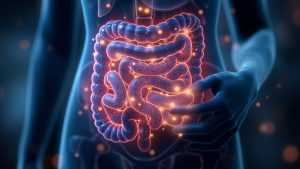
Previous studies had already described associations between the composition of the gut microbiota and blood pressure. The new study went a step further: The researchers wanted to know whether differences in the gut microbiome could be detected even before the onset of preeclampsia.
Researchers Examined the Gut Before Diagnosis
For the study, stool samples from pregnant women in an existing pregnancy study were analyzed. The samples were collected during the 28th week of pregnancy—that is, at a time when the women had not yet been diagnosed with preeclampsia.
In total, the researchers compared 10 women who later developed late-onset preeclampsia with 24 women whose blood pressure remained normal throughout their pregnancies. Using a comprehensive metagenomic analysis, they examined not only which bacteria were present but also which metabolic and functional characteristics were associated with them. This distinguishes the study from many earlier works, in which the gut microbiota was examined only after the onset of preeclampsia.
Earlier research also examined stool samples at 28 weeks of gestation and found, among other things, a lower abundance of the butyrate-producing bacterium Coprococcus in women who later developed late-onset preeclampsia.
The Composition of the Gut Microbiota Was Different
Women who later developed preeclampsia had a different composition of gut microbiota compared to women with a normal pregnancy course. The differences were not simply a matter of the number of bacteria present. Regarding so-called alpha diversity—which, among other things, describes the diversity within a single sample—the researchers found no significant difference.
The situation was different when it came to so-called beta-diversity, which compares how much the composition of microbial communities differs between different individuals. Here, clear differences were observed between the two groups.
Among other things, changes were observed in bacteria from the genera Anaerotignum and Clostridium, as well as in Bacteroides fragilis. At the same time, several species from the genus Faecalibacterium were less abundant in women who later developed preeclampsia.
Bacterial Metabolic Pathways Were also Altered
It wasn’t just the question of which bacteria were present that was of interest. The researchers also investigated which biological functions were associated with the microbiome. Among other things, they found differences in metabolic pathways involved in the production of certain fatty acids and phospholipids. A metabolic pathway associated with the formation of propionate also showed differences between the groups.
This could be relevant because gut bacteria produce numerous metabolites that can interact with the immune system, metabolism, and vascular function. However, these results do not yet allow us to conclude that a specific change in the gut microbiota causes preeclampsia.
Blood Pressure and Specific Bacteria Were Linked
The researchers did not only examine whether the composition of the gut microbiota differed between the two groups. They also examined whether certain bacteria were associated with the measured blood pressure readings of the pregnant women. This revealed statistical associations with both systolic and diastolic blood pressure. It was particularly interesting that these associations could not be reduced to a single bacterial species. Some microorganisms were associated with higher blood pressure readings, while others were more closely linked to lower readings. Even within the same bacterial genus, the results sometimes differed. This is entirely understandable from a biological perspective. Bacteria belonging to the same genus can differ significantly in terms of their metabolic activity. They can produce different substances or react to different components of food. Therefore, the name of a bacterial genus alone does not indicate what effect it has on the human body.

The metabolites produced by gut bacteria could represent a possible link to blood pressure. Microorganisms in the gut break down, among other things, indigestible components of food, producing various bioactive molecules in the process. These include short-chain fatty acids such as acetate, propionate, and butyrate. These can communicate via signaling pathways with the immune system, metabolism, and possibly also with the regulation of blood vessels. Blood pressure regulation is particularly complex during pregnancy. The body must ensure adequate blood flow to the placenta and the developing fetus, while at the same time the mother’s cardiovascular system adapts to pregnancy. Changes in this interaction can contribute to high blood pressure or, later on, to preeclampsia in some women.
However, the study does not provide evidence that specific gut bacteria directly raise or lower blood pressure in pregnant women. These are statistical correlations. Whether changes in the microbiome influence blood pressure, whether altered blood pressure in turn changes the gut flora, or whether both are influenced by another factor cannot be determined from these data. For this reason, too, it would be premature to label individual bacteria as “protective” or “harmful.” It is more likely that the interaction of a large number of microorganisms and their metabolic byproducts plays a key role. The results are nonetheless interesting because they reveal a possible link between the gut microbiome, metabolism, and blood pressure regulation even before the onset of preeclampsia. Larger studies must now determine whether a reproducible pattern can be identified from these findings, which could potentially be used in the future to better assess individual risk.
Is the Gut Microbiome an Early Warning System for Preeclampsia?
This is precisely where the researchers draw an important line. Although the differences were detectable even before the onset of the disease, the study was unable to identify a clear microbial pattern that could reliably predict which women would later develop preeclampsia. The authors explicitly emphasize that a corresponding risk signature has not yet been found.
This is also important because the study was very small. Only ten women went on to develop late-onset preeclampsia. Larger studies must therefore verify whether the observed differences also occur in other population groups. It is interesting to note that another study from 2026 points in a similar direction. In that study, 75 women who developed pregnancy-induced hypertension were compared with 195 control subjects. The researchers examined the gut microbiota during pregnancy and additionally combined the results with blood analyses of metabolites.
There, too, changes in the gut microbiome were evident even before the clinical diagnosis. Among other things, certain Bacteroides species were more prevalent. At the same time, the researchers found changes in various metabolic pathways and blood metabolites that may be related to inflammatory and vascular processes. These findings are interesting because they support the idea that changes in the microbiome and metabolism can occur before the onset of a hypertensive pregnancy complication. However, this study also cannot prove a clear cause-and-effect relationship.
Could the Microbiome One Day be Used for Preventive Care?
Theoretically, such a development would be interesting. A stool sample could be significantly less invasive than many other medical tests. If, at some point, a reliable pattern of certain bacteria or microbial metabolites could be identified, this might potentially contribute to individualized risk assessment. However, research is still a long way from that at present. The current study initially shows that differences in the gut microbiome may be present prior to the later onset of preeclampsia. It does not show that the condition can already be reliably detected based on the gut flora.
The question of whether the risk can be influenced by specifically altering the gut flora also remains open. Whether, for example, certain diets, dietary fiber, probiotics, or other interventions can actually prevent the onset of preeclampsia must be investigated in appropriately large clinical trials.
What Pregnant Women Can Take Away From This
The new findings are no reason to take probiotics on your own during pregnancy or to radically change your diet to prevent preeclampsia. Rather, they provide further evidence that the development of pregnancy complications may be influenced by a complex interplay of various systems. These include, among others, blood vessels, metabolism, the immune system, the placenta, and possibly also the gut microbiome.
Regular prenatal care remains crucial in medical practice. The gut microbiome is not yet an established test for predicting preeclampsia. Research in this area is still in its early stages. The exciting question for the coming years will be whether the observed changes can be confirmed in larger studies—and whether this could eventually lead to a reliable marker or even a new preventive strategy.
Related Posts
-

A new blood test has 80 percent accuracy in predicting preeclampsia in premature births, according…
-
A number of natural changes occur during pregnancy, from sense of smell, food cravings, and…
-

As a pregnant mother, you likely know the importance of monitoring your overall nutrition, as…


