

Cookies, chips, sugary breakfast cereals, and french fries are part of everyday life for many children. However, highly processed foods may not only influence eating habits but also be linked to how the child’s brain reacts to food cues. A new study shows that children who consume particularly large amounts of such products exhibit greater activity in the brain’s reward system. These reactions, in turn, were associated with a greater increase in body fat in the following year.
The Reward System Reacts Particularly Strongly to Tempting Foods
Childhood nutrition is an important topic for parents. Especially in the early years of life, children develop preferences for certain flavors, become familiar with different foods, and get used to certain eating habits. What’s regularly on the menu can therefore also influence, in the long term, which foods are preferred. Highly processed foods, in particular, have increasingly become the focus of research. They are convenient, often inexpensive, and widely available. Many products are also formulated to appear particularly appetizing and can tempt people to eat them repeatedly.

But what role does the brain play in this? A new study from the Keck School of Medicine at the University of Southern California (USC) provides interesting insights. For the study, the scientists followed 46 children between the ages of seven and ten. At the start of the study, all had a healthy body weight. The researchers wanted to find out whether differences in diet are already reflected in the activity of certain brain regions and whether these are linked to later changes in body composition. To do this, they examined the children using magnetic resonance imaging (MRI). While the brain scans were being taken, the participants were shown images of particularly appetizing foods, including cookies and French fries. At the same time, the scientists recorded the children’s dietary habits as well as various physical measurements.
A striking pattern emerged: Children who consumed more highly processed foods showed greater activity in the so-called dorsal striatum when viewing the food images. This brain region is part of the reward and motivation system. It plays an important role in how we respond to pleasant stimuli and which behaviors we want to repeat. The increased activity could indicate that certain foods trigger a particularly pronounced reward response in these children.
Link to a Greater Increase in Body Fat
The study became particularly interesting during the follow-up. One year after the initial measurements, the researchers re-measured the children’s BMI, body fat percentage, and waist circumference. The results showed that those with a stronger reward system response to the food images tended to experience greater increases in body fat and BMI over the following year.
The scientists then investigated the extent to which brain activity might contribute to this association. When they included the responses of the dorsal striatum in their statistical analyses, the association between the consumption of highly processed foods and BMI weakened by 31 percent. For body fat percentage, the association decreased by 44 percent. This suggests that the brain’s response to food cues could explain part of the link between diet and subsequent changes in body composition. However, the study does not prove that highly processed foods directly alter the reward system or inevitably lead to weight gain. Further studies are needed to determine this.
What Makes Highly Processed Foods so Special?
Not every industrially produced food is automatically unhealthy. Rather, what matters is how heavily a product has been processed and what ingredients are used in its production. Highly processed foods, often referred to as ultra-processed foods (UPFs), frequently contain a combination of refined carbohydrates, fats, sugar, salt, and various additives. These include, for example, many sweet breakfast foods, packaged snacks, ready-to-eat meals, instant soups, soft drinks, and certain industrially produced baked goods. Such products often have a particularly intense flavor and can be consumed quickly and easily. Their composition frequently offers a combination of sweet, salty, fatty, or crunchy textures, which can be especially appetizing. This creates the risk of eating more than originally intended.
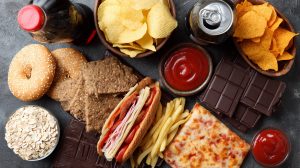
Texture also plays a role. Many highly processed products are soft, easy to chew, and quick to swallow. As a result, they are often eaten more quickly than, for example, vegetables or whole-grain products. This may delay the onset of the feeling of fullness. At the same time, such foods often contain comparatively little fiber, vitamins, and other valuable nutrients. If they are regularly replaced with fresh and less processed products, the quality of the overall diet may suffer.
In the U.S., according to the dietary data cited in the study, about 67 percent of the calories consumed by children come from highly processed foods. Such products are also playing an increasingly significant role in other industrialized countries. This can be particularly problematic for children when ready-made products, sugary drinks, and highly processed snacks regularly replace fresh and varied meals. This is not about banning certain foods outright. An occasional cookie or a serving of french fries is no cause for concern. What matters most is the overall picture of the diet. When children are regularly exposed to a variety of foods and fresh, minimally processed products are a natural part of their daily lives, this can lay a solid foundation for balanced eating habits in the long term.
Why Childhood Is So Important for Later Eating Habits
The brain continues to develop throughout childhood and adolescence. At the same time, habits form that can influence attitudes toward food and eating behavior in the long term. Through experience, children learn which foods they like, when they eat, and what role food plays in their daily lives. Not only taste and hunger but also habits, emotions, and the environment play a role in this process.
The reward system is involved in these learning processes. When certain foods are repeatedly associated with pleasant taste experiences, corresponding reactions can occur in the brain. Researchers at USC therefore emphasize that childhood is a particularly important phase for developing eating habits. Early interventions could potentially help prevent unhealthy eating patterns from becoming entrenched in the first place. The current study provides an interesting starting point for this: It shows that the brain’s response to food cues may play a greater role in the development of eating behavior than previously assumed.
What is the Significance of this Topic for Pregnancy and Early Childhood?
A balanced diet is also an important issue for expectant parents. During pregnancy, the foundations for the child’s growth and development are laid. A varied diet for the mother provides her and the unborn child with important nutrients. After birth, the importance of nutrition continues. Breastfeeding or infant formula, the subsequent introduction of solid foods, and later shared family meals are important milestones in the development of a child’s eating behavior.

In particular, the introduction of solid foods offers children the opportunity to become familiar with different flavors and foods. Vegetables, fruits, legumes, and other minimally processed foods can be gradually integrated into the diet. However, the new study did not examine nutrition during pregnancy or the effects of specific foods on the brains of unborn children. It therefore provides no direct evidence that the consumption of highly processed foods during pregnancy influences the reward system’s later responses. Nevertheless, the research underscores how important a mindful dietary environment can be from the very beginning. Parents also shape their children’s diets through their own eating habits and the food available at home.
Healthy Eating Must be Feasible in Everyday Family Life
The researchers point out that the responsibility for healthy childhood nutrition cannot rest solely with parents. Highly processed foods are often inexpensive, have a long shelf life, and are readily available. Families with little time or a limited budget, in particular, understandably turn to such products more often. Improving children’s nutrition therefore also requires better systemic conditions. These include easier access to fresh foods, balanced meals in preschools and schools, and a dietary environment that makes healthier choices easier.
For families, a balanced diet doesn’t have to be complicated. Often, even small changes are enough: preparing meals at home more often, making fruits and vegetables regular parts of the diet, and choosing less highly processed snacks. It’s also important to offer children a variety of foods without pressuring them. New flavors may seem unfamiliar at first. Repeatedly trying new foods and sharing meals together can help bring greater variety to the diet.
Further Research Aims to Show How Eating Habits Can be Influenced
The scientists plan to continue their research and follow the children through puberty into young adulthood. In doing so, they aim to observe how brain development, eating habits, and body composition change over time. A further study will also examine whether a dietary shift toward less highly processed foods can alter the brain’s response to food cues.
To this end, children who regularly consume large amounts of such foods could be offered more alternatives that are less processed. Subsequently, researchers could investigate whether this alters the activity of the reward system and the development of body composition. Until such results are available, it remains unclear to what extent the observed brain reactions are actually influenced by diet.
However, the current study makes it clear that children’s nutrition involves more than just calories and body weight. The degree of food processing and the brain’s response to food cues may also play a role. For parents, this is another reason to ensure a varied diet from an early age and to provide children with as diverse an access to natural foods as possible.
Related Posts
-

According to a new study by University College Cork (UCC), children who regularly consume foods…
-

Many expectant mothers feel cravings for certain foods during pregnancy and sometimes eat too much…
-

Up to 25% of mothers suffer from postpartum depression after giving birth, which can have…


