

According to a new study by University College Cork (UCC), children who regularly consume foods high in fat and sugar may experience lasting changes in the brain that persist long after their diet has improved. The researchers also found that beneficial gut bacteria and prebiotic fiber could help mitigate some of these long-term effects and promote healthier eating habits later in life.
Childhood Diet and Long-Term Changes in the Brain
Scientists at APC Microbiome, a leading research center at UCC, discovered that an unhealthy diet at a young age can alter the way the brain regulates appetite and food intake. These changes persisted even after the unhealthy diet was discontinued and body weight returned to normal.
Today’s children are surrounded by highly processed foods that are heavily advertised and easily accessible. Foods high in sugar and fat have become commonplace at birthday parties, school events, sports events, and even as rewards for good behavior. Researchers say that this constant exposure can shape eating habits at a young age and promote eating patterns that persist into adulthood.

The study, published in Nature Communications, found that early exposure to high-calorie, nutrient-poor foods can have lasting effects on eating behavior. The researchers used a preclinical mouse model and found that animals exposed to a high-fat, high-sugar diet at a young age exhibited persistent changes in eating behavior as adults. The team linked these behavioral effects to disruptions in the hypothalamus, a brain region responsible for regulating appetite and energy balance. This brain region acts as a central control center for energy balance and processes signals from the body and gut that provide information about hunger, fat reserves, and nutrient requirements. If this regulation is influenced during a sensitive developmental phase, the system’s “set point” can shift permanently—for example, toward increased food intake or a heightened preference for energy-dense foods.
In addition, the scientists suspect that the interaction between the brain and the gut microbiome also plays an important role. Changes in the gut flora could send signals to the brain that influence the reward and appetite systems in the long term. Overall, the results suggest that early nutrition not only shapes short-term habits but can also deeply influence the biological regulation of appetite and energy intake.
Gut Bacteria Could Help Restore Healthy Eating Habits
“Our findings show that what we eat in our early years really matters,” explained Dr. Cristina Cuesta-Martí, first author of the study from APC Microbiome Ireland at University College Cork. “Early dietary experiences can have hidden, long-term effects on eating behavior that aren’t immediately apparent based on weight alone.” According to the researchers, a diet high in sugar and fat during early life appears to influence the development of the brain networks that control hunger, satiety, and cravings for certain foods. Even after the animals were later returned to a normal diet and their weight stabilized, changes in eating behavior persisted.
The scientists suspect that the hypothalamus, in particular, is sensitive to early dietary influences. If these regulatory mechanisms are influenced by highly processed foods at a young age, this could lead in the long term to the body being more strongly programmed toward high-calorie foods. This could explain why some people continue to experience frequent cravings later in life or have difficulty maintaining healthy eating habits over the long term. Of particular interest to the researchers was the role of the gut microbiome—the billions of bacteria in the digestive system that are closely linked to metabolism, the immune system, and brain function. The study showed that a targeted modification of these gut bacteria could help partially mitigate the negative long-term effects of an unhealthy diet. In their research, the scientists tested the probiotic strain Bifidobacterium longum APC1472, which significantly improved eating behavior even though it only slightly altered the overall microbiome. This suggests that certain bacterial strains could have a very targeted effect on communication between the gut and the brain.
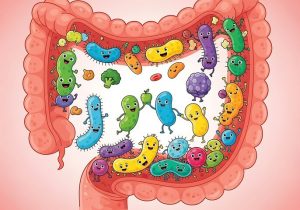
In addition, the team investigated prebiotic fibers such as fructo-oligosaccharides (FOS) and galacto-oligosaccharides (GOS). These serve as food for beneficial gut bacteria and occur naturally in foods such as onions, garlic, leeks, asparagus, and bananas. In contrast to the single probiotic strain, the prebiotics led to broader changes across the entire gut microbiome. The researchers therefore suspect that both targeted probiotic approaches and a high-fiber diet could have the potential to promote healthier eating patterns and mitigate the long-term effects of poor dietary habits.
The findings increasingly underscore the importance of the so-called gut-brain axis—that is, the close connection between the digestive system and the brain. Future research will now aim to clarify whether similar effects also occur in humans and whether certain probiotics or dietary strategies could help reduce the long-term risk of obesity and disordered eating behaviors.
Microbiome Research Opens Up New Possibilities
“Crucially, our findings show that specifically modulating the gut microbiota can mitigate the long-term effects of an unhealthy diet in early childhood on later eating behavior,” explained Dr. Harriet Schellekens of APC Microbiome Ireland at University College Cork. The researcher emphasizes that the importance of the gut microbiome is particularly evident during sensitive developmental phases: In early childhood, both the brain and the systems governing hunger, satiety, and reward behavior are strongly shaped. Interventions during this phase could therefore have long-term effects on dietary habits.
The background to this is the so-called gut-brain axis—a communication network between gut bacteria, metabolism, and the central nervous system. Previous studies suggest that the composition of the gut microbiota can influence neurotransmitters, inflammatory processes, and neural circuits, which in turn control eating behavior. If an unhealthy diet in childhood disrupts this balance, unfavorable patterns in the brain could become entrenched, making them difficult to change later on. However, the current findings show that targeted modulation of this microbiota can at least partially mitigate these effects.
Professor John F. Cryan, Vice President for Research and Innovation at University College Cork and co-author of the study, also highlights the broader significance of the work. He describes it as an example of how basic research can lead to concrete solutions for societal challenges. “By demonstrating how nutrition in early childhood shapes the brain pathways involved in regulating food intake, this work opens up new possibilities for microbiota-based interventions.”
This refers to potential future therapies or prevention strategies that specifically target the gut microbiome—for example, through certain probiotics, prebiotics, or combined dietary approaches. The goal would be not only to treat existing disorders but also to intervene early, before unhealthy eating habits become firmly entrenched in the brain. The study thus suggests that the microbiome could play an important role in the future prevention of nutritional and metabolic diseases, particularly in connection with obesity and long-term changes in eating behavior.
Related Posts
-

Many expectant mothers feel cravings for certain foods during pregnancy and sometimes eat too much…
-

The joy of your pregnancy is often tempered by the realities of the condition, which…
-

The holiday season is a particularly hard time to stay focused on a healthy diet…


