

During pregnancy, it’s not just your body size that changes. Your skin and hair also react to the hormonal shifts. Some women enjoy a more even complexion and thicker hair, while others suddenly struggle with breakouts, dark spots, or dry skin. These changes are driven by complex biological processes that continue to evolve throughout pregnancy and after childbirth.
Why Skin and Hair Change During Pregnancy
Pregnancy significantly disrupts the hormonal balance of the female body—though in a positive sense, as a necessary adaptation to the child’s development. Estrogen and progesterone levels rise, blood flow increases, and metabolism also changes. These processes affect not only the uterus and breasts but also the skin, sebaceous glands, and hair follicles. The extent of these changes varies from person to person. While some women develop a radiant complexion, others notice an increase in skin blemishes or changes in hair texture.

Skin and hair are sensitive to hormonal changes. Estrogen and progesterone, in particular, influence various processes in the skin, including pigmentation, blood flow, and the activity of certain glands. Among other things, estrogen plays a role in regulating skin moisture and collagen production. Blood vessels also react to hormonal changes. Increased blood flow during pregnancy can make the skin appear more flushed, and some women develop a rosier complexion.
Progesterone also affects the skin and can, among other things, alter the activity of the sebaceous glands. This can alter the skin’s natural oil production. For some pregnant women, the skin becomes oilier, while for others it becomes drier or more sensitive. Added to this are changes in the immune system and metabolism. These can influence how the skin reacts to external stimuli and whether pre-existing skin conditions become more or less pronounced during pregnancy.
Blemished Skin or a Radiant Complexion: How Hormones Change the Appearance of the Skin
The so-called “pregnancy glow” is a frequently described phenomenon. One of the reasons behind it is increased blood flow to the skin. Combined with changes in sebum production, this can make the face appear rosier and slightly more radiant. However, not all women experience this benefit. For some, sebum production increases, making it easier for pores to become clogged. Blackheads and inflammatory pimples are possible consequences. Existing acne can also change during pregnancy.
Several factors play a role here. In addition to hormonal influences, individual predisposition, the composition of sebum, and inflammatory processes are also involved. Therefore, it is not possible to predict in general terms how the skin’s appearance will develop. In the case of sensitive skin, dryness, a feeling of tightness, or a stronger reaction to certain skincare products may also occur.
Pigment Spots and Melasma: Why the Skin May Darken
One of the most common skin changes during pregnancy is increased pigmentation. It is particularly noticeable on the nipples, the areolas, and along the midline of the abdomen. This dark line is called the linea nigra. Irregular brownish spots may also appear on the face. Doctors refer to this condition as melasma or chloasma gravidarum. Colloquially, this change is known as the “pregnancy mask.”
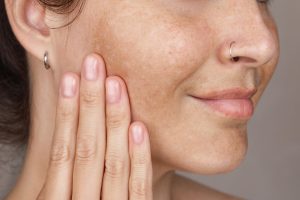
The cause is increased activity of the melanocytes. These are specialized skin cells that produce the pigment melanin. Estrogen, progesterone, and other hormonal signals can influence this pigment formation. UV radiation often further intensifies the appearance.
This is why pigmented spots occur particularly on areas exposed to the sun, such as the forehead, cheeks, and upper lip. Consistent use of sunscreen with a high SPF can help prevent further darkening. After childbirth, many of these changes gradually fade. However, they do not always disappear completely and may reappear during subsequent pregnancies.
Why Hair Often Becomes Thicker During Pregnancy
Many women notice during pregnancy that their hair appears thicker and stronger. This is due to a change in the natural hair growth cycle. Each hair goes through different phases. In the anagen phase, it grows actively; this is followed by a transitional phase and finally the telogen phase, during which the hair rests and later falls out. Normally, not all hairs are in the same phase at the same time. As a result, a person loses a certain number of hairs every day without this leading to visible thinning.
During pregnancy, hormonal changes in particular cause a larger proportion of hair follicles to remain in the growth phase longer. Estrogen is believed to play an important role in this process. Hair falls out less frequently and therefore appears thicker overall. However, this change is temporary. After childbirth, hormone levels shift again, causing the hair growth cycle to adjust once more.
Postpartum Hair Loss: Why So Much Hair Suddenly Falls Out
About three to four months after giving birth, many women notice increased hair loss. What may seem alarming at first is often a normal consequence of hormonal changes. During pregnancy, many hair follicles remain in the growth phase longer. After childbirth, estrogen levels drop significantly. Many of these hairs then enter the resting phase and subsequently the shedding phase at different times. This phenomenon is known as postpartum telogen effluvium. During this time, more hair falls out than usual, often especially when washing or brushing. The hair may temporarily appear thinner overall.
In most cases, this is a temporary process. The hair growth cycle usually returns to normal within six to twelve months after childbirth. Hair density then typically recovers. If hair loss persists significantly longer, is particularly severe, or is accompanied by other symptoms, a medical examination should be conducted. Among other things, iron deficiency or changes in thyroid function can also contribute to hair loss.
Stretch Marks and Other Changes in Connective Tissue
In addition to pigment spots and changes in hair growth, stretch marks may also develop. They occur particularly frequently on the abdomen, breasts, hips, and thighs. Medically, they are referred to as striae gravidarum. They develop when the skin stretches significantly as the abdomen and breasts grow, causing changes in the structure of the deeper skin layers. Several factors play a role here: mechanical stretching, genetic predisposition, and hormonal influences. In particular, changes in collagen and elastin metabolism can affect the elasticity of the connective tissue.
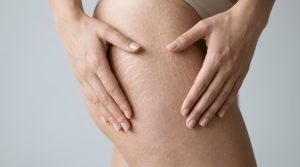
Fresh stretch marks often appear reddish or purple. Over time, they usually become lighter in color and less noticeable. However, they do not always disappear completely. Genetic predisposition also influences how prone a woman is to developing stretch marks. Creams and oils can nourish the skin and relieve feelings of tightness. However, there is no scientific evidence that they reliably prevent stretch marks.
What Skin Care Is Recommended During Pregnancy
Since the skin can change during pregnancy, it’s a good idea to adapt your skin care routine to your current needs. A routine that is as simple as possible—using mild cleansers, moisturizers, and daily sunscreen—serves as a good foundation for many women. For pigmentation spots, a broad-spectrum sunscreen with a high SPF is particularly important. It protects against UVA and UVB rays and can prevent existing discoloration from becoming more pronounced.
When dealing with acne, active ingredients should also be chosen carefully. Not all ingredients normally used in skincare products are suitable during pregnancy. In particular, retinoids such as tretinoin and isotretinoin should be avoided during pregnancy. It is also recommended to consult with your doctor regarding other medicinal active ingredients. Gentle cleansing, adequate moisturization, and consistent sun protection are usually more beneficial than using a wide variety of different skincare products.
When Skin Changes Should Be Examined by a Doctor
Most changes to the skin and hair during pregnancy are harmless and will at least partially resolve after childbirth. However, there are symptoms that should not simply be dismissed as normal hormonal side effects. Severe itching, especially on the palms of the hands and soles of the feet, deserves special attention if there is no visible rash. This may be a sign of intrahepatic pregnancy cholestasis. This is a liver disorder associated with pregnancy that can be linked to elevated bile acids in the blood. Those affected should seek medical attention immediately.
Pronounced rashes, blistering, or inflammatory changes should also be examined by a doctor. Some rare pregnancy-specific skin conditions require targeted treatment and, if necessary, closer monitoring. If a mole changes noticeably in size, shape, or color, a dermatological examination should also be conducted.
Conclusion: Skin and Hair React to Hormonal Changes
Changes in the skin and hair during pregnancy reflect complex adaptive processes. Hormones, blood circulation, metabolism, and genetic factors collectively influence how a person’s outward appearance changes.
While some women experience thicker hair and a rosy complexion, others may develop acne, pigmentation spots, or dry skin. After childbirth, hormone levels shift once again. This can temporarily lead to increased hair loss and other changes.
Most of these changes are part of the body’s natural adaptation and will subside over time. However, not every skin change should automatically be attributed to hormones. In cases of severe itching, noticeable rashes, or persistent hair loss, a medical evaluation is advisable.
Related Posts
-

Expectant mothers won't just be noticing mood swings, big bellies, and swollen ankles during their…
-

Your body produces many hormones during pregnancy to cause all the necessary changes for growing…
-

Of course, you want to look your best at all times, including during pregnancy. Hair…


