
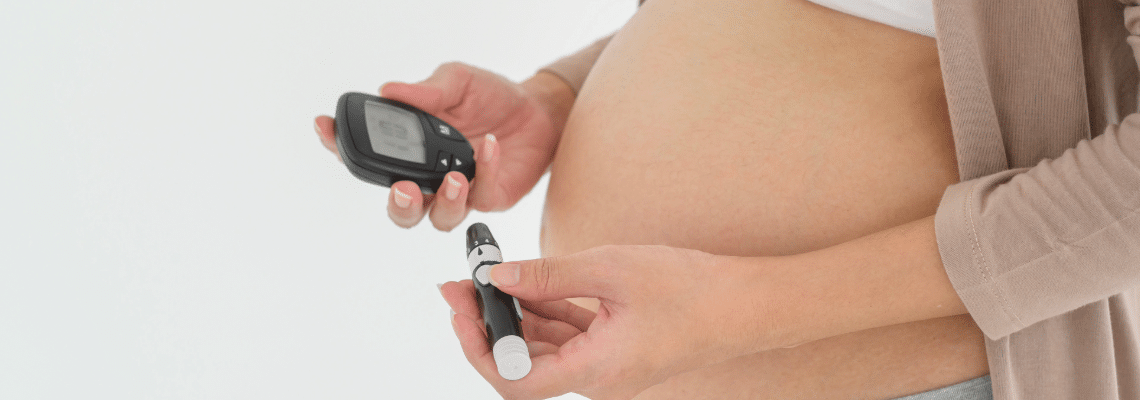
A Danish study involving more than 750,000 pregnancies provides new insights into the possible link between weight-loss injections and pregnancy complications. The study revealed a striking difference: an increased risk of preterm birth was observed primarily in women taking GLP-1 medications for diabetes. When these medications were used for weight management, this association could not be confirmed.
More Than 750,000 Pregnancies Analyzed
Weight-loss injections such as Ozempic and Wegovy are no longer discussed solely in the context of weight loss. As these active ingredients are increasingly used by women of childbearing age, researchers are paying closer attention to potential effects on pregnancy and child development. A new Danish study provides data on this topic from an unusually large population. Scientists analyzed health data from 756,636 pregnancies and investigated whether taking certain GLP-1 medications around the time of conception was associated with complications. In doing so, they noticed a difference that could play an important role in medical assessment: The observed risk of preterm birth appeared to be linked to the reason for which the women were being treated.

For the study, the research team drew on national health registries in Denmark. The analysis included 756,636 singleton pregnancies among a total of 480,231 women. The births included in the study took place between October 2009 and December 2023. The study focused on two active ingredients: semaglutide and liraglutide. Semaglutide is found in medications such as Ozempic and Wegovy, while liraglutide is used, for example, under the brand name Saxenda for weight management. The researchers defined potential drug exposure as a situation in which a woman had filled a prescription for one of these medications within an eight-week period before or after the first day of her last menstrual period.
This time frame is relevant because a pregnancy is often not yet known in the first few weeks. A woman may therefore continue to use a medication without yet knowing that she is expecting a child. In total, the researchers identified 529 pregnancies with corresponding prescription records. This represents a comparatively small proportion of the pregnancies studied. The results must therefore be interpreted with caution, despite the large overall dataset.
Preterm Births: The Difference Between Diabetes and Weight Loss
The study’s key finding emerged only after a more detailed breakdown of the participants. The scientists distinguished between women with pre-existing diabetes and those without the condition. This distinction was important because GLP-1 medications are prescribed for different reasons: on the one hand, to treat type 2 diabetes, and on the other hand, for weight management in cases of overweight or obesity.
After statistical adjustment for various confounding factors, an increased risk of preterm birth persisted among women who had received the medications as part of diabetes treatment. For liraglutide, the calculated adjusted odds ratio was 1.70; for semaglutide, it was 1.84. This means that the statistical likelihood of preterm birth in these groups was higher than in the respective comparison groups. In contrast, among women without pre-existing diabetes who had been prescribed the medications for weight management, no statistically significant association with preterm births was found. The result is noteworthy because it contradicts a simple explanation that the active ingredients alone must be responsible for the observed risk.
Could Diabetes itself be the Bigger Problem?
The researchers believe it is possible that the underlying metabolic disorder plays a significant role in the observed difference. Diabetes present before pregnancy can have various effects on the course of pregnancy. These include changes in metabolism, blood sugar regulation, and vascular function. The risk of pregnancy complications is also generally higher among women with diabetes. These include, among other things, preterm births and other problems that may require more intensive medical care.
This raises an important distinction: If women with diabetes have a higher risk of complications during early pregnancy, this cannot automatically be attributed to the medication. Rather, it could be that the disease itself or other associated health factors play a greater role. However, the Danish study cannot provide a definitive answer to this question. Since it is an observational study, no clear cause-and-effect relationship can be established.
Why the Results Do Not Mean the All-Clear for Weight-Loss Injections
The fact that no statistically significant association with preterm births was found in women without diabetes is an interesting observation. However, it should not be interpreted as proof that semaglutide or liraglutide are safe during pregnancy. There are several reasons for this. First, the number of pregnancies with potential drug exposure—529—was comparatively small. When broken down by active ingredient and diabetes status, the individual groups become even smaller.
Second, based on the filled prescriptions, the researchers could not determine with certainty whether the women had actually taken the medication or when the last dose was administered. Third, the study examined potential exposure around the time of conception and during early pregnancy. It does not provide comprehensive information about intentionally continued treatment throughout the entire pregnancy. Other potential influences also cannot be completely ruled out in such a study. The results are therefore an important building block of research but do not replace medical recommendations regarding the use of these medications.
Why Good Blood Sugar Control Is So Important Before and During Pregnancy
The study also draws attention to a topic that is sometimes overlooked in the discussion of weight-loss injections: the importance of well-controlled metabolic conditions. For women with type 2 diabetes, pregnancy should be medically planned and monitored as early as possible. Blood sugar control plays an important role even before conception. Elevated blood sugar levels can affect the development of the unborn child and increase the risk of various pregnancy complications.
If a woman with diabetes is taking a GLP-1 medication and wishes to become pregnant, it is therefore essential to determine in a timely manner how her treatment can be adjusted. During pregnancy, other, appropriately tailored treatment approaches are used. This is not simply a matter of discontinuing a medication. Rather, it is crucial that the metabolic condition continues to be well managed. Women should therefore not change their existing diabetes medication on their own. Further treatment should be managed by the treating medical team.
What Does this Mean for Women Planning to Become Pregnant?
The Danish findings underscore how important it is not to focus solely on the active ingredient itself when assessing medication risks. A woman’s baseline health status can also significantly influence the course of pregnancy. Diabetes, obesity, and other metabolic disorders each carry their own risk factors.
For women who use semaglutide or liraglutide for weight management and are planning a pregnancy, the previous recommendation remains in effect: These medications are not intended for use during pregnancy. The prescribed withdrawal periods prior to planned conception must also be observed. These vary depending on the active ingredient and the specific medication. For semaglutide, for example, it is recommended to discontinue treatment at least two months before a planned pregnancy.
The new study therefore provides no basis for lifting these precautions. Rather, it shows that existing medical conditions must also be taken into account when scientifically assessing potential pregnancy risks.
An Important Implication for Future Research
The Danish study offers a new approach for further investigation of GLP-1 medications in the context of pregnancy. Until now, the primary focus has often been on whether early exposure to these medications could increase the risk of birth defects or other harm. The new study broadens this perspective to include additional pregnancy outcomes and shows that the underlying medical condition can play an important role in interpreting the results. Further studies must clarify whether this difference is also confirmed in other population groups and which factors actually influence the risk of preterm birth. This will require larger datasets and the most accurate information possible regarding actual medication use.
The Danish study shows that the assessment of GLP-1 medications around the time of pregnancy is more complex than it initially appears. While an increased risk of preterm birth was observed in women with diabetes, no such association could be demonstrated in women without diabetes. An accompanying scientific commentary in Human Reproduction Open also emphasizes that the underlying metabolic disorder—rather than medication use itself—may be responsible for the difference. However, factors such as the duration and severity of diabetes, as well as the quality of blood glucose control, cannot be fully accounted for in the study. The findings thus provide important evidence that medications and individual health conditions should not be considered in isolation when assessing pregnancy risks. For women planning to become pregnant, early medical consultation remains crucial—especially if they are being treated with semaglutide or liraglutide.
Medical Consultation When Planning a Pregnancy and During Pregnancy
Women who are using semaglutide or liraglutide and are planning a pregnancy should discuss their treatment with their doctor early on. This is especially important for those with existing type 2 diabetes, as safe blood glucose control must be ensured even during pregnancy. If a pregnancy is confirmed during treatment, medical advice should be sought promptly. The next steps depend on the active ingredient used, the timing of the last dose, and the individual’s health status. Medications should not be continued on one’s own, nor should necessary diabetes treatments be discontinued without consulting a doctor.
Related Posts
-

According to a study conducted by researchers from the US- based Kaiser Permanent group in…
-

The benefits and general impacts of selenium were previously unknown, but with advances in modern…
-

According to the CDC, women with Type 1 and Type 2 diabetes can have a…


