
Scientists have found evidence suggesting that the effects of a mother’s age on her offspring may be due more to reversible changes in gene activity than to permanent DNA damage. This discovery opens up the fascinating possibility that biological information from mothers, grandmothers, and even great-grandmothers can influence the health of future generations.
Rotifers Provide Clues About the Effects of Maternal Age
A mother’s age can influence the physical traits and behavior of her offspring in humans and many other animal species. Researchers refer to these changes as “maternal age effects.” Although this phenomenon is widespread throughout the animal kingdom, scientists are still trying to understand the underlying biological processes and clarify why it has persisted throughout evolutionary history. “Maternal age effects are incredibly widespread, ranging from invertebrates to humans, elephants, other primates, and other mammals,” said Kristin Gribble, a research associate at the Bay Paul Center at the Marine Biological Laboratory. “Virtually all life forms exhibit maternal age effects to some degree, and in most cases, these are negative effects caused by the mother’s advanced age.”
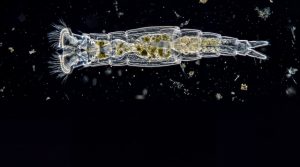
To investigate how information about maternal age is passed on to offspring, Gribble’s lab studied rotifers—tiny aquatic animals that reproduce rapidly and are well-suited for laboratory experiments. “Understanding the mechanism in these simple invertebrates can help us understand how the effects of maternal age occur in humans as well,” she said.
Research on rotifers has led the team to an unexpected possibility: the effects of maternal age may be controlled by epigenetic processes that alter gene expression, rather than by mutations that change the underlying DNA sequence. As part of the work conducted by postdoctoral fellow Alyssa Liguori—who is now an assistant professor at SUNY New Paltz—in Gribble’s lab, two different genotypes of the same rotifer species were studied. The results showed that the effects associated with maternal age did not become progressively stronger with each generation. Instead, these effects could be reversed within a single generation.
This rapid reversal contradicts the notion that maternal age effects are primarily caused by the gradual accumulation of cellular damage or age-related DNA mutations, as many researchers had previously suspected. Instead, the results point to an epigenetic process involving histone modifications. These modifications can influence whether genes are turned on or off.
How Mothers Might Pass On Biological Information
Gribble’s team is now investigating whether histone modifications are responsible for the effects of maternal age observed in rotifers. She is also considering whether mitochondrial DNA, which is typically inherited from the mother, might play a role “in the transmission of information about maternal age from mothers to their offspring.” Genetic differences could also determine the extent to which offspring are affected by an older mother. “There are likely gene variants that protect against the negative effects of advanced maternal age,” Gribble said. “In one of our lineages, we found that offspring of older mothers had longer lifespans, suggesting that a genetic mechanism may be involved in this positive effect.” This finding highlights an important complication. Although advanced maternal age is often associated with adverse consequences, genetic variations can sometimes mitigate these effects or even confer benefits.
Why the Effects of Maternal Age Persist
A major evolutionary mystery is why the effects of maternal age have persisted across so many different animal species, despite their sometimes negative consequences. For example, if older mothers produce offspring that live shorter lives or have reduced reproductive capacity, one might expect natural selection to weaken such disadvantages over many generations. One possible explanation is that natural selection exerts a weaker influence later in an organism’s life. Traits that only emerge in old age are therefore often subject to less selective pressure than those that are already important during early development or the reproductive phase.
This relationship may be particularly evident in rotifers. They have a rapid life cycle and produce a large portion of their offspring at a young age. By the time a female reaches an advanced age, she may have already made a significant portion of her evolutionary contribution. Negative changes that arise only afterward and affect the quality of the offspring may therefore be less strongly eliminated by natural selection.
In addition, maternal age effects are likely caused by several biological processes occurring simultaneously. Age can influence, among other things, metabolism, cellular functions, mitochondrial activity, and gene regulation. Furthermore, different genetic variants may respond differently to the mother’s age. As a result, some offspring might be more severely affected, while others are better protected or even exhibit advantages.
This makes it clear that a biological trait does not necessarily have to be optimal to be preserved over many generations. If its disadvantages do not manifest until late in life or have only a minor impact on reproduction, the selective pressure may be too weak to eliminate it completely. This is precisely why maternal age effects are so interesting for evolutionary research: they show that the traits of a new generation are influenced not only by its own genome but possibly also by the mother’s condition at the time of reproduction.
Biological Effects Across Generations
For Gribble, one of the most exciting questions is how biological information can be passed on beyond a single generation. Of particular interest is the possibility that not only a mother’s immediate living conditions but also the experiences of earlier generations could influence the traits of her offspring. This raises the question of whether the environment of a grandmother or even a great-grandmother can still have measurable effects on the phenotype of her grandchildren or great-grandchildren.

Epigenetic changes could be one possible explanation for this. In this process, it is not the DNA sequence itself that is altered, but rather the activity of certain genes that is influenced. Under certain conditions, some of these changes can be preserved across generations. Mitochondrial DNA, which is predominantly inherited from the mother, could also play a role in the transmission of certain biological information. However, it is not yet fully understood which mechanisms are actually responsible for this and how long such changes can persist.
Understanding these processes could also be significant for research into human health in the long term. If it turns out that certain environmental conditions or biological changes have effects spanning several generations, this could help us better understand differences in health, aging, or disease risks. Scientists might then need to consider not only a person’s genes but also the biological conditions under which previous generations lived.
However, caution is warranted: The findings from rotifers to date cannot be directly applied to humans. It remains unclear whether comparable mechanisms play a significant role in humans. Above all, this research opens up a new perspective on heredity: A person’s biological history might potentially encompass more than just the DNA they inherit from their parents. Under certain circumstances, the environment and the biological condition of earlier generations could also influence the next generation.
What Does this Mean for Expectant Mothers?
For expectant mothers, this research does not initially mean that they need to worry or monitor their behavior to protect the health of multiple generations. The findings come from studies on rotifers and cannot currently be directly applied to humans. However, they demonstrate how complex the connection between maternal health, age, and the development of offspring can be. Therefore, during pregnancy, it remains most important to focus on the well-established factors: a balanced diet, sufficient exercise, avoiding alcohol and nicotine, and good medical care. Research on the effects of maternal age also offers an exciting glimpse into the possibility that the health of mother and child may be linked by biological processes that extend far beyond pregnancy.
Related Posts
-

Hormone levels during early fetal development—which can affect a child's development and increase the mother's…
-

Pregnancy at 38 years of age or older is a bit riskier than it was…
-

Recent information shows that women who had their children after the age of 40 are…


