
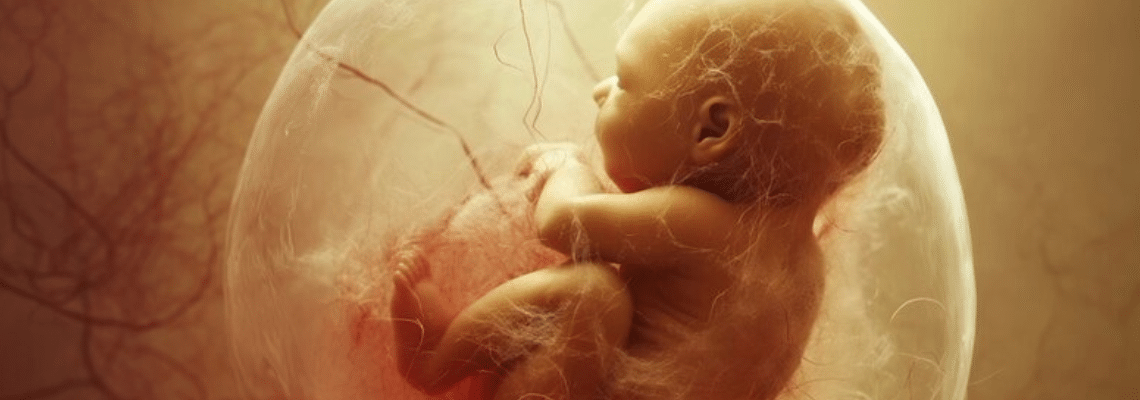
During pregnancy, it’s not just a baby that grows inside the mother’s body. A highly complex biological communication system develops between the mother, the baby, and the placenta, one that is constantly changing throughout the entire pregnancy. Hormones, nutrients, metabolic byproducts, immune messengers, and even cells can transmit information between the mother and the baby.
The placenta plays a central role in this process. It connects the mother’s and the baby’s bodies without their blood circulations normally mixing directly. At the same time, it is far more than just a supply station: The placenta produces hormones, responds to signals from the mother’s body, and influences the immune system. Signals from the unborn baby can also influence the environment around the placenta and, consequently, the mother’s body. Pregnancy is therefore a constant exchange between two organisms.
The Placenta is the Communication Hub of Pregnancy
When one thinks of the placenta, the first things that come to mind are oxygen and nutrients. In fact, however, this temporary organ performs many more functions. It facilitates the exchange of oxygen and nutrients, helps remove the baby’s metabolic waste products, and simultaneously produces numerous hormones that prepare the mother’s body for pregnancy.
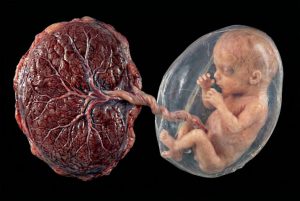
The placenta grows and changes continuously throughout pregnancy. Its blood vessels and tissue structures adapt to the increasing needs of the growing baby. The larger the baby grows, the more oxygen and nutrients are needed. The placenta must therefore constantly adjust its transport capacity.
This is not a purely mechanical process. The placenta can respond to changes in the mother’s metabolism, to inflammatory processes, and to other signals. Scientists are therefore increasingly describing it as an active organ of communication that mediates between the needs of mother and child.
The Baby also Sends Signals to the Mother
This communication is not a one-way street. The unborn child is also connected to the mother’s body via the placenta and other biological signaling pathways.
As the baby grows, for example, its metabolism and its need for energy and nutrients change. The placenta is involved in processing these signals and adapts its functions to the respective stage of pregnancy. At the same time, pregnancy alters the mother’s metabolism so that sufficient energy and nutrients are available to the child.
This demonstrates how closely the two organisms are connected: The mother’s body adapts to the growing child, while the child’s development depends on the conditions within the mother’s body. The placenta serves as the crucial interface in this process.
The Immune System Must Perform an Unusual Balancing Act
The communication between mother and baby within the immune system is particularly fascinating. The unborn child possesses both maternal and paternal genetic material and is therefore not completely immunologically identical to the mother. Nevertheless, the mother’s immune system does not normally attack it as a dangerous foreign body.
For a pregnancy to succeed, the mother’s immune system must therefore strike a special balance. It must not completely abandon its protective function—after all, the body must still be able to respond to pathogens. At the same time, an environment must be created at the interface between mother and child in which the baby can develop.
Various immune cells and signaling molecules in the tissue surrounding the placenta play an important role in this process. The immune system is therefore not simply shut down during pregnancy. Rather, its activity and composition change depending on the respective stage of pregnancy.
This finely tuned regulation is also important because an excessive inflammatory response can impair the function of the placenta. Researchers are therefore intensively studying how immune cells communicate with one another at the so-called maternal-fetal interface and how disruptions to this balance can contribute to pregnancy complications.
The Placenta Protects the Baby – While Simultaneously Allowing Important Substances to Pass Through
The placenta also serves as a kind of filter and control mechanism. Not everything in the mother’s blood automatically reaches the baby. The placenta regulates which substances are transported and how they reach the baby’s circulatory system.
Oxygen and certain nutrients are specifically transferred, while other substances are retained or altered. At the same time, the placenta is not a completely impermeable barrier. Certain medications, alcohol, nicotine, and some pathogens can cross the placental barrier or affect its function.
This highlights why the mother’s health is so important during pregnancy. Nutrition, metabolism, infections, and other stressors can generate signals to which the placenta must respond. In doing so, it attempts to keep conditions for the baby as stable as possible, but it is not able to completely shield the baby from every harmful influence.
When Communication Becomes Unbalanced
Communication between the mother, placenta, and baby normally functions with extreme precision. However, if this balance gets out of control in certain areas, it can affect the pregnancy.

Researchers are therefore investigating, for example, the role that changes in the placenta and the immune system play in preeclampsia, fetal growth restriction, or preterm birth. It is becoming increasingly clear that such pregnancy complications are not caused by a single problem alone. Rather, changes in various biological systems may be interconnected.
Infections are also of interest in this context. The placenta has its own mechanisms for recognizing and defending against pathogens. At the same time, it must prevent an excessive immune response from endangering the pregnancy. The response to infections is therefore another example of the exceptionally finely regulated communication between mother, placenta, and baby.
The Baby’s Cells Can Remain in the Mother’s Body
The connection between mother and child becomes particularly fascinating in the context of so-called microchimerism. During pregnancy, it is not only molecules and signaling substances that can be exchanged between mother and child. Individual cells can also cross the placenta and enter the other organism.
As a result, fetal cells can remain in the mother’s body and, in some cases, remain detectable there for many years. Conversely, maternal cells can also enter the child’s body. This phenomenon is referred to as fetal or maternal microchimerism.
The long-term significance of these cells has not yet been fully clarified. There is evidence suggesting that they may be involved in immune responses, tissue repair, and other biological processes. At the same time, researchers are investigating whether, under certain circumstances, they may also be linked to diseases. Research in this area is not yet complete.
The Connection Does Not Necessarily End With Birth
This adds an interesting dimension to the period following pregnancy. If fetal cells can indeed remain in the mother’s body for years, the biological connection between mother and child does not necessarily end completely with birth.
Of course, this does not mean that mother and child continue to “mutually influence” each other in a simple or measurable way after pregnancy. Rather, microchimerism shows that pregnancy can leave lasting biological traces. The significance of these cells for the health of the mother and child is the subject of current research.
A Unique Biological Partnership
Pregnancy is thus far more than just the growth of a child in the womb. It is a constant interaction between two organisms, with the placenta serving as the central interface.
Hormones alter the mother’s body, nutrients and oxygen are specifically transported to the child, the immune system adapts its response, and signals from the child’s organism can in turn influence the environment. At the same time, the placenta protects the unborn child from numerous dangers without completely interrupting the exchange with the mother’s body.
The more closely scientists examine these processes, the clearer it becomes just how actively the placenta is involved in pregnancy. It is not merely a connection between mother and child, but a highly complex communication and control center that coordinates growth, metabolism, hormones, and immune responses.
It is precisely this close communication that could help us better understand in the future why some pregnancies proceed without problems while others are plagued by complications. Research into maternal-fetal communication could therefore not only expand our understanding of normal pregnancy but also, in the long term, open up new possibilities for detecting pregnancy complications earlier and treating them more effectively.
Related Posts
-

Maternal stress could leave epigenetic marks in the placenta's genes associated with cortisol, a hormone…
-
A study on mice has shown that the bacterium Bifidobacterium breve in the mother's gut…
-

New research demonstrates increased pregnancy risk with boys that may affect both mother and baby.…


