

In a study conducted by researchers from the Universities of Cologne and Düsseldorf, as well as the University Hospital of Bonn, mothers throughout Germany were asked eight to twelve months after giving birth how they rated their experiences in terms of “autonomy,” “professional support,” “perceived safety,” and “participation in decision-making” during their childbirth experience. The highest levels of satisfaction in all four areas were reported for vaginal births without medical interventions. In general, the women rated their birth experience quite positively, with an average score of 3.09 out of a maximum of 4 points. However, women who underwent obstetric interventions reported significantly lower satisfaction scores. Five percent of the participants reported an overall negative birth experience. The study “Effects of Obstetric Interventions on the Childbirth Experience” was published in the journal BMC Pregnancy and Childbirth.
How Obstetric Interventions Affect the Childbirth Experience
Despite the social relevance of this topic and its significance for the women affected, there are only a few scientific studies in Germany that address obstetric care in hospitals and the issue of “women’s experiences of violence during childbirth.” The study is based on responses from 852 mothers and is part of the MAM-Care project, which focuses on the needs, autonomy, and safety of women in obstetric care in Germany. “Since women are less satisfied with their childbirth experience when they undergo obstetric interventions, aspects such as self-determination and good collaboration between the obstetric team and the women in labor are particularly important,” said project leader Professor Dr. Nadine Scholten, who conducted the study at the Institute for Medical Sociology, Health Services Research, and Rehabilitation Science (IMVR) at the University of Cologne.
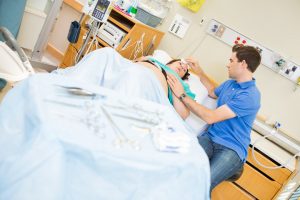
Obstetric interventions include fundal pressure (pressure on the abdomen), unplanned cesarean sections, episiotomies, and assisted vaginal deliveries (vacuum extraction/forceps delivery). Unplanned cesarean sections received the lowest ratings in the areas of “ability to act independently” and “perceived safety”; assisted vaginal deliveries scored lower than unplanned cesarean sections in the dimensions “professional support” and “participation.” In general, women who underwent an unplanned cesarean section or an assisted vaginal delivery rated their “sense of agency” lower than women who underwent fundal pressure or an episiotomy.
However, the researchers also noted that negative experiences in individual areas of the questionnaire do not necessarily lead to an overall negative birth experience, as they can be partially offset by positive experiences in other dimensions. This suggests that the birth experience is a multifaceted and dynamic process in which various factors interact with one another. Particularly significant in this context are aspects such as reliable emotional and professional support from the obstetric team, clear and understandable communication, and the feeling of continuing to be actively involved and taken seriously despite medical necessities. The authors of the study therefore emphasize the central role of self-efficacy and the woman’s sense of agency. Women who feel they can contribute to decision-making and are sufficiently informed about procedures are more likely to report positive birth experiences—even when medical interventions were necessary. Similarly, building a trusting relationship between the obstetric staff and the woman in labor can help reduce anxiety and strengthen her sense of security.
Furthermore, the researchers point out that targeted measures in everyday clinical practice can help minimize negative experiences associated with obstetric interventions. These include, among other things, early education about possible interventions, respectful and empathetic care during childbirth, and the active involvement of the woman in decision-making processes, to the extent medically possible. The goal should be to preserve the autonomy and dignity of the woman giving birth—even in situations where medical interventions are necessary—and to facilitate the most positive birth experience possible.
How the Birth Experience Shapes Development
It is an experience as wondrous as it is mysterious: birth. Yet little is known about how birth—particularly via cesarean section—affects a person’s long-term development. Since these procedures are being performed with increasing frequency in the healthcare system to achieve positive outcomes for both mothers and babies, it is important, according to William Kenkel, assistant professor of psychology and neuroscience at the University of Delaware, to understand these long-term effects—both the positive and the negative. Of particular interest is how different birth experiences—including vaginal delivery, emergency cesarean section, and elective cesarean section—affect the developing nervous system, and what role hormones play in this process. This led Kenkel to ask whether the disruption of naturally occurring hormones during a cesarean section could be a factor contributing to the known health effects associated with cesarean sections. Previous research by various authors has identified links between cesarean sections and negative health outcomes in children, including obesity, asthma, and autism. For example, studies have shown that delivery by cesarean section increases a child’s risk of obesity at age 5 by a staggering 55%.
Understanding the Body’s Stress Response
During childbirth, hormone levels rise sharply in both the mother and the baby, regulated by the nervous system. These stress hormones serve to stimulate labor and help the baby adapt to life outside the womb. Among the adjustments babies must make at birth are establishing breathing, regulating body temperature, and responding to microbes transmitted by the mother—which help us regulate our immune system, digestion, and much more. However, while reviewing the research literature, Kenkel found that the type of delivery can influence the amount of stress hormones released at the time of delivery. For example, vaginal delivery showed the highest concentration of birth-signaling hormones, followed by emergency cesarean section, and finally by elective cesarean section, which had the lowest levels. He also pointed out that during cesarean delivery, some of these normal hormonal signals are disrupted or—in the case of an elective cesarean section—are not triggered at all. It is not yet known how long these hormonal differences persist. This led Kenkel to ask whether research should devote more attention to this topic, since these hormones, which act early in life, are capable of programming development—meaning they can cause lasting changes.
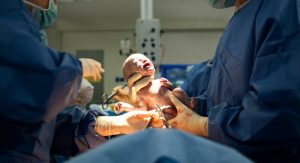
Other research, particularly regarding a healthy microbiome, has focused on whether interventions should be used to reintroduce microbes that babies born via cesarean section may have missed out on. Researchers are wondering whether the same approach could be used to introduce hormones in children that may not have been activated due to a cesarean birth. This isn’t necessarily a new idea. For example, preterm infants are often given a hormone called cortisol to support lung maturation. While much of the research has focused on the hormone oxytocin and whether it might play a role in the causes of autism, according to Kenkel, cesarean deliveries and obstetric interventions more broadly are all factors that influence oxytocin signaling during this sensitive period around birth.
“There are phases in our development when hormones have long-term consequences,” Kenkel said. “For example, if I were to experience stress right now, I would generally recover from it quickly. In early childhood, however, we are vulnerable because we are still trying to learn what the environment will be like. So if my mother was under high stress while I was in the womb, that signals to me that the environment into which I am being born is a harsh one, and therefore I might want to adapt my development to be prepared for it.” These hormones are also versatile. Oxytocin is known for its role in social bonding and in helping a mother form a bond with her baby, but evolution has found many other uses for it. Oxytocin is also very effective at regulating appetite, body temperature, and the stress response. “These seemingly unrelated aspects of life are linked by the same hormone; and when seemingly unrelated medical interventions affect these hormones, it can lead to surprising results,” he said. If it could be demonstrated that hormones during childbirth play a long-term role in life, Kenkel said, this would provide researchers with clues to investigate possible interventions that could be used during childbirth to ensure an outcome closer to that of a vaginal delivery.
Related Posts
-

Guest Author: Juliet Forsyth-Farrelly Have you ever watched episodes of a certain TV program and…
-

Pregnancy is a beautiful and exciting time, but things don't always go smoothly. In fact,…
-

It is not uncommon to run a fever during pregnancy, but high fevers during the…


